

Justin Moore was not about to become a sad statistic about book sales. Even before he started writing his debut book, he saw a presentation by Lulu CMO Matt Briel showing that most authors' sales decline dramatically after month three. Justin made a commitment with himself then that he wouldn't write a book only to have it not reach its intended readers. He knew he needed a plan to sell it long before it went to market.
Justin just passed 10,000 copies sold of his book Sponsor Magnet last month. He didn't stop selling it three months post-launch. He sells the book all the time. On social media. On his email list. In person at events. When he does speaking gigs. It took him about 20 months to smash his goal of selling 10,000 books, but he's not slowing down now that he's hit it. "I put my blood, sweat and tears, everything I know about brand partnerships [into the book]. I'm going to keep talking about this book for fricking ages, for years," Justin told me.
Anyone who watches Justin work knows his marketing game is masterful but, as prepared as he was for the launch, he developed many of his sales techniques once the book was in the market. What's more impressive is that only about 500 copies were sold in bulk orders. The rest were individual sales. Justin has found creative ways to keep book promo both interesting for him and engaging for his audience going on two years now and he kindly shared a bunch of what's worked with us.
Pre-sale was slow but public milestones drove 2,500 sales on launch
Pre-orders weren't as big for Justin as I thought they were, having followed his journey to the book release online. He said it was "maybe a couple hundred copies" sold in the pre-sale phase, but what was really effective was creating a public milestone campaign around getting the book in readers' hands post-launch.
Given what he learned from Matt's talk, Justin wanted to keep everyone motivated to push through the crucial first 90 days. He put together a series of milestones that all Sponsor Magnet readers would unlock as more books were sold. They included things like a "Private LIVE negotiation role-play workshop" and a secret video on "How I Responded to a Brand That Rejected My Pitch." He also hired book launch strategist KC Procter, who now works at Kit, to figure out what to prioritize leading up to the release.
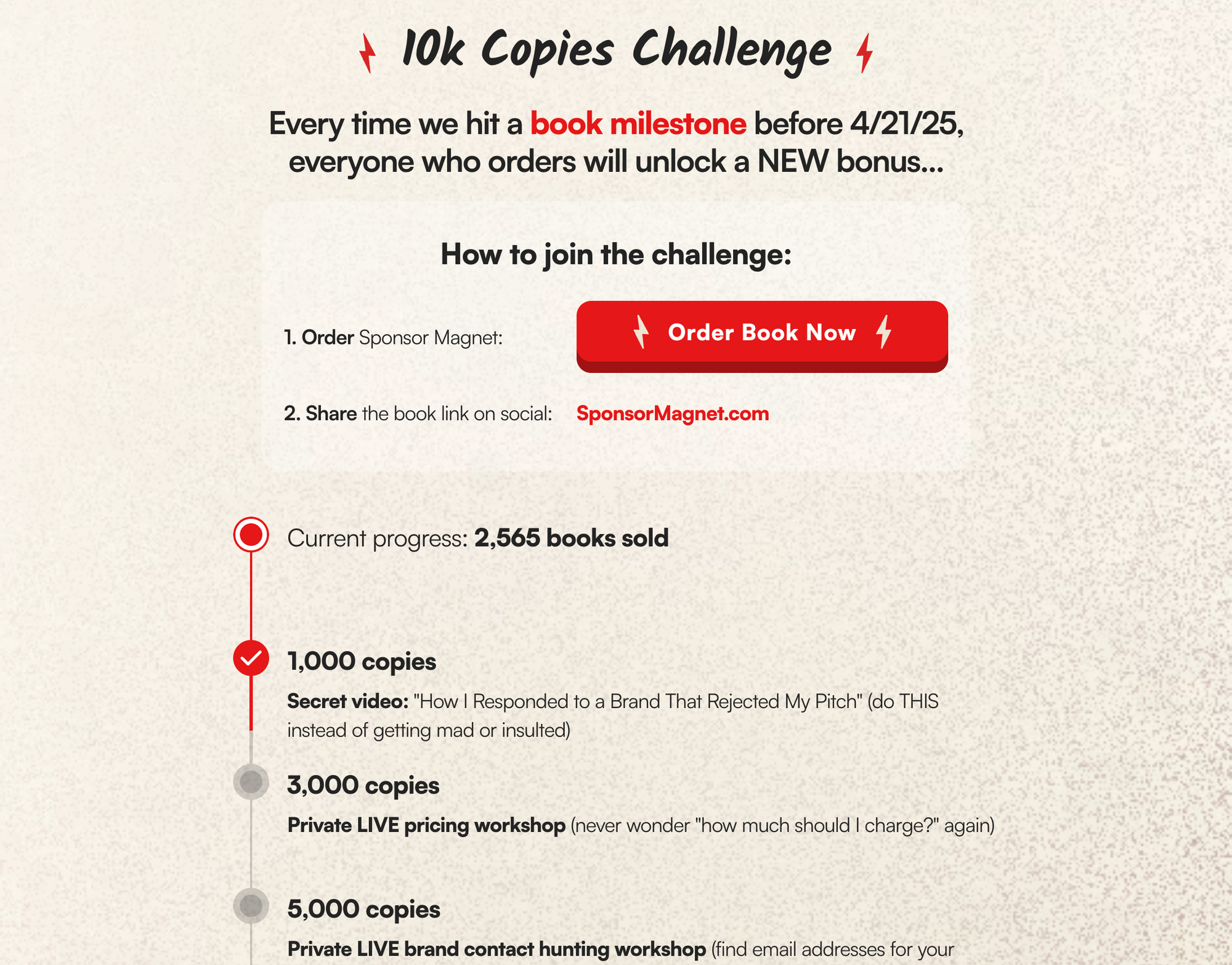
Justin sold 2,565 copies during those first 90 days. He heard from people who said they bought the book to see the tracker move closer to the goal. It also gave Justin something new to post about beyond just the book being available. He gave progress reports on social media so potential readers could see what new prizes they might get for their purchase. Worth mentioning that, because Justin primarily sells his book on his own website, he has his readers' contact info to share these bonuses with them.
I asked Justin how important the advanced praise blurbs were in the front of the book. Did those people help promote the book early on? He said that's not the point of them. It's about building faster trust with a new reader. He asked friends, clients and colleagues he's known for years to share an endorsement about his knowledge in the sponsorship space. These included professional creators like Jay Clouse and Pat Flynn, brand partners like Kit and Circle and students like Molly Donlan. Potential readers can see these testimonials inside the book and on the book's website. They might recognize some of the names, which might persuade them to buy, but it's tough to track how much they drive sales.
A podcast tour outperformed other channels and Justin's about to do another one
Before the book came out, Justin booked 60-70 guest appearances on podcasts to promote it. Those included The Smart Passive Income Podcast, Growth in Reverse, and Dealcasters. He's about to do it again for his new app Sponsor Mole—which helps creators find brand deals based on the techniques in the book—because these interviews were so effective for him.
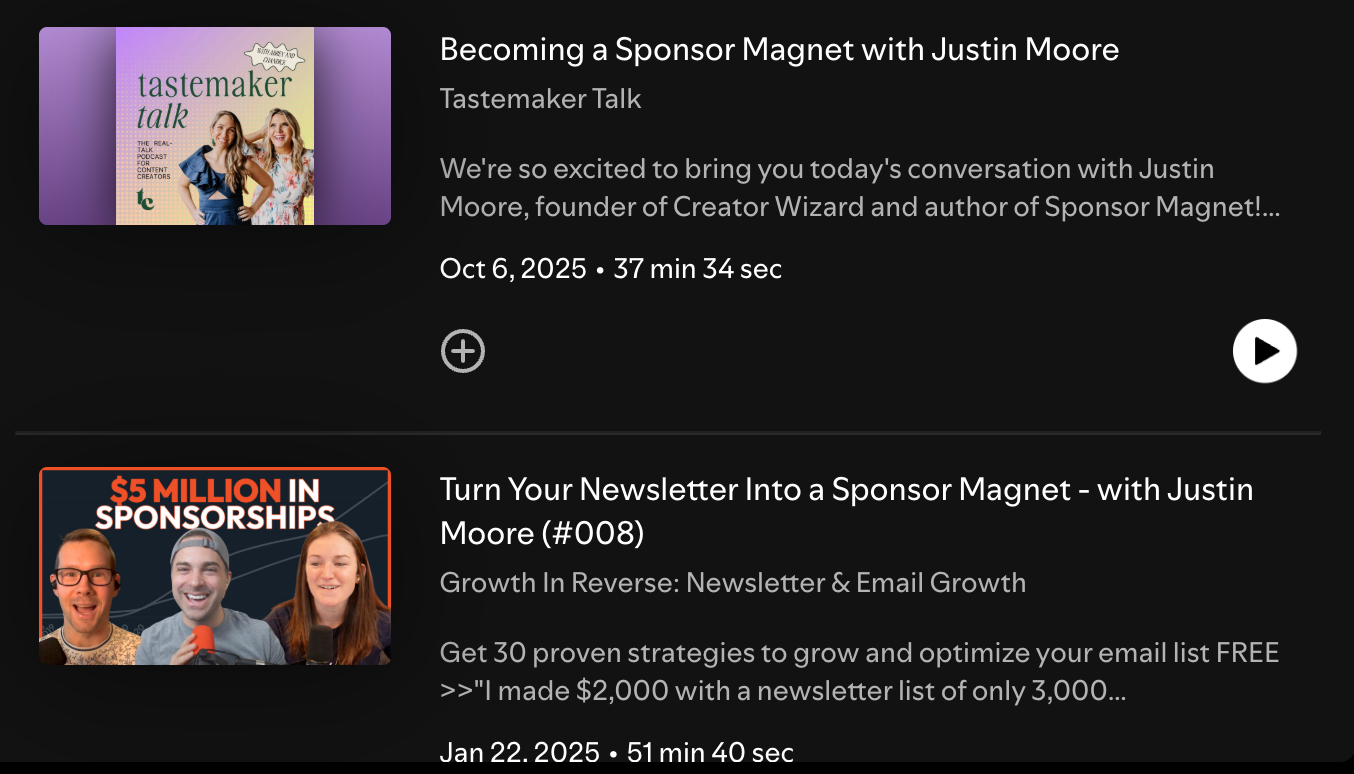
Justin's book title lends itself to a lot of word play so many podcasters used it in their episode titles like "Turn your newsletter into a Sponsor Magnet" (Growth in Reverse) and "How to Become a Creative Sponsorship Magnet" (Creative Chats with Mike Brennan). That likely boosted brand recognition and memory of what the book is called, which is even more important for podcasts because people have to listen and then go do a completely different action elsewhere: buy the book. Justin said, "10% of the podcasts I went on delivered 90% of the results." He wishes he had tracked this better. He knows the podcast tour worked because he would see sales spike on days when episodes dropped, but he didn't use unique URLs or codes so his data on which podcasts drove book sales was manually captured. Next time around, he plans to choose the podcasts he appears on more wisely and he will track their results more intentionally.
Beyond podcast guesting, Justin used his own channels to post a lot of behind the scenes content about the making of the book and about the sponsorship strategies featured in it. His main channels are YouTube, X, LinkedIn and his own newsletter. He boosted every single photo and testimonial from readers, which incentivizes more readers to share their experience online. Justin also posted new case studies coming out from how readers were applying the book in real life, carousels with wisdom from the book, and talking head videos with him holding the book. Even in posts that aren't about the book directly, the book is often visible in the shot, sitting off to the side from his desk in the background of most videos.
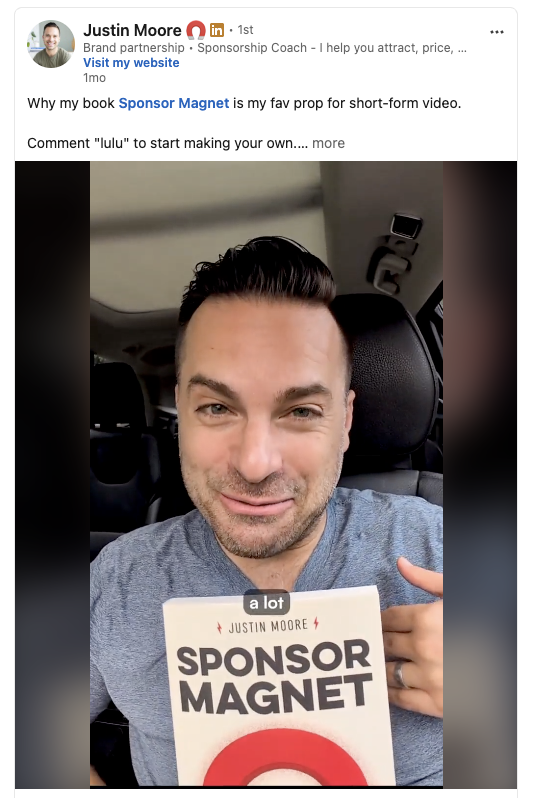
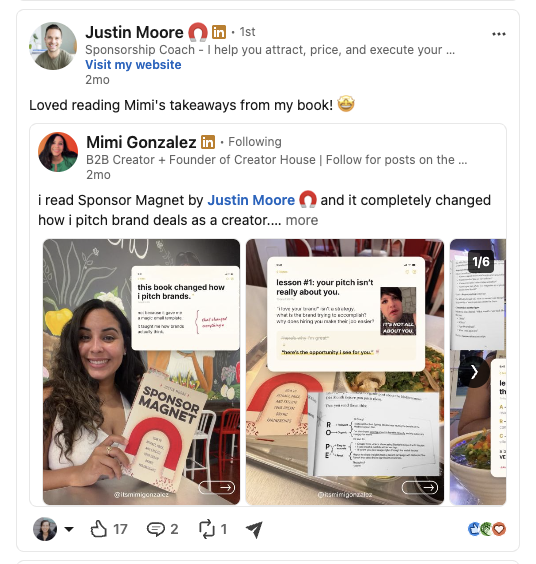
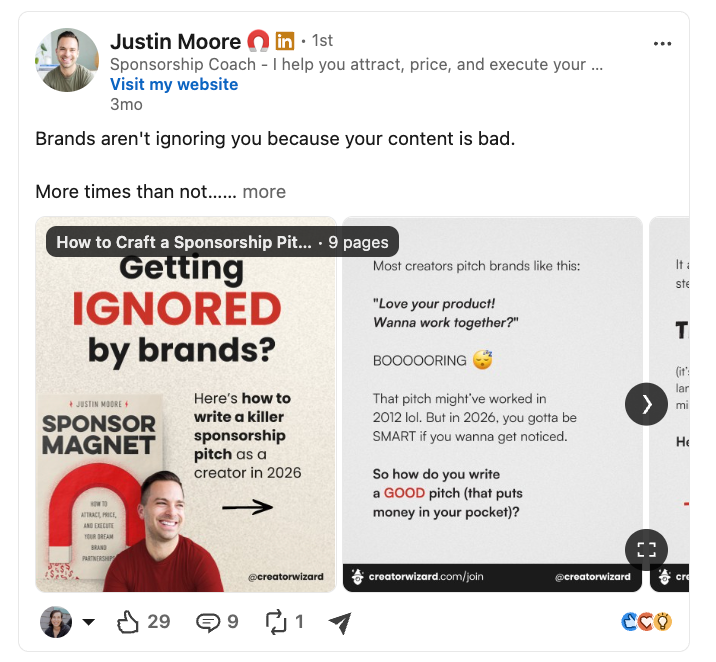
Justin promoting his book on LinkedIn
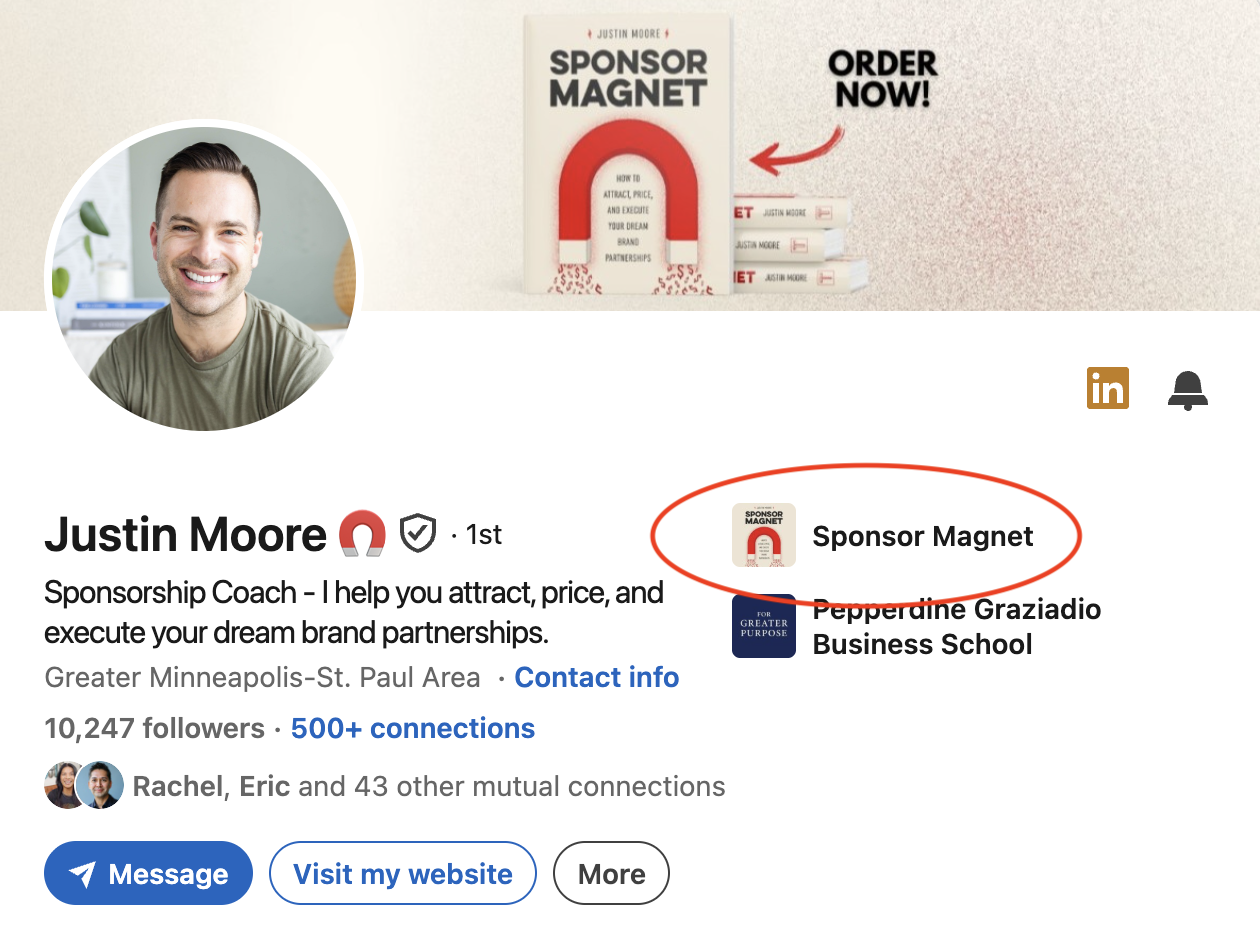
Another interesting thing Justin did on LinkedIn is feature the book as his top experience item, even above his coaching business. That means it's shown in the header of his profile too, so you can't miss it if you come across his posts on the platform. Of course, he's got the book in his banner too just in case you do miss it.
Turning himself into a walking billboard at his last event attracted 50 new potential readers
I've only seen Justin in person twice and both times he was wearing his own branded merch. He told me the t-shirt with the book cover he recently posted was newly made for a last minute trip to VidSummit, but he must have a closet of red polo shirts with the Creator Wizard (his coaching business) logo on them because he's photographed in them quite a bit. That same red color is used in the book cover.
The book cover t-shirt has already proven valuable. "I probably had 50 creators come up to me at VidSummit who had never heard of the book and didn't know who I was," he told me. Before this shirt existed, he carried an LED backpack that showed the book cover and the URL to buy the book around his speaking gigs and conference visits.
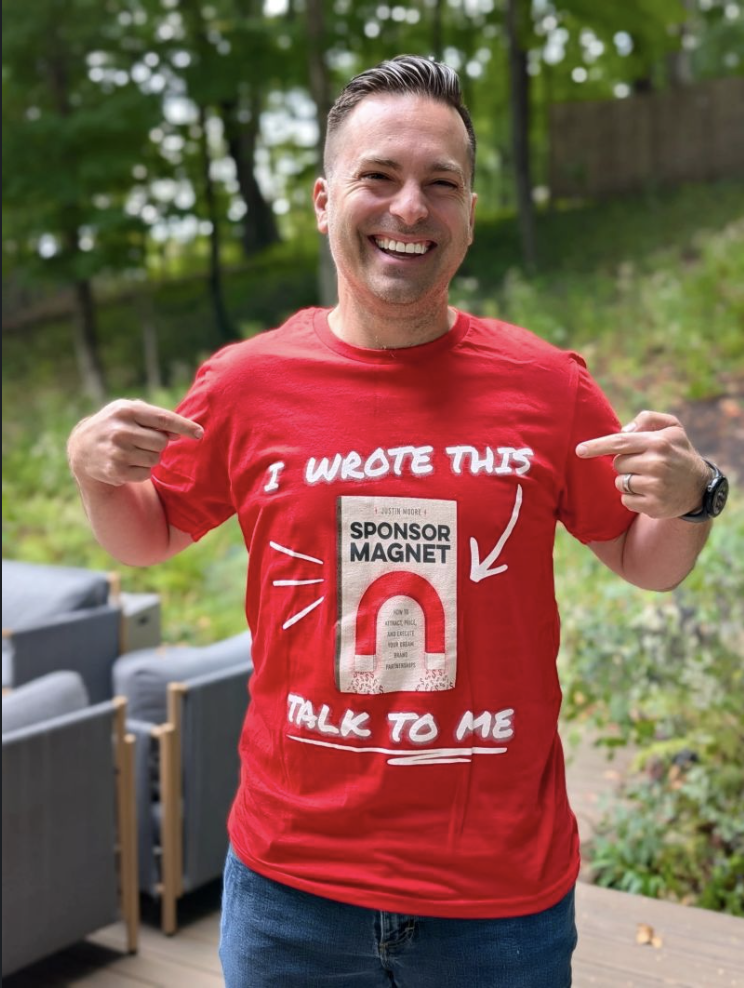
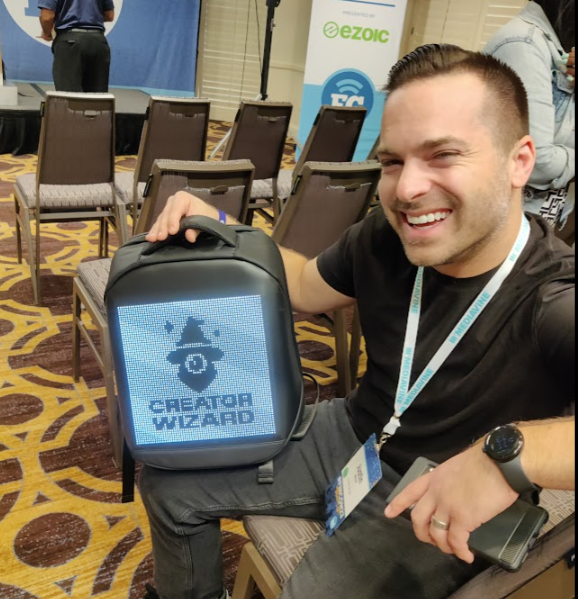
Justin with his book cover t-shirt and his LED backpack
Justin may have sold 10,000 copies of Sponsor Magnet, but he's looking at how massive his potential reach could be with millions of creators out there who could benefit from his book. "If you are not a shameless shill for your creative work and your art, no one's going to be," he said, adding that he's going to keep making merch to wear and to bring to events because it's been working to attract potential readers to talk to him.
Automatic upsells for book bundles and for other products make a $20 book a $10k+ opportunity
A drawback for authors with only one book is that the revenue-per-book is not usually that meaningful, even when selling thousands of copies. But Justin's found a way to book make good money on the book AND make money on his other products and services.
When you go to order the book, the default option selected for you is a $30 bundle that includes the paperback, the audiobook and the eBook. He also has bulk orders, available self-serve, ranging from 3 to 100 copies.
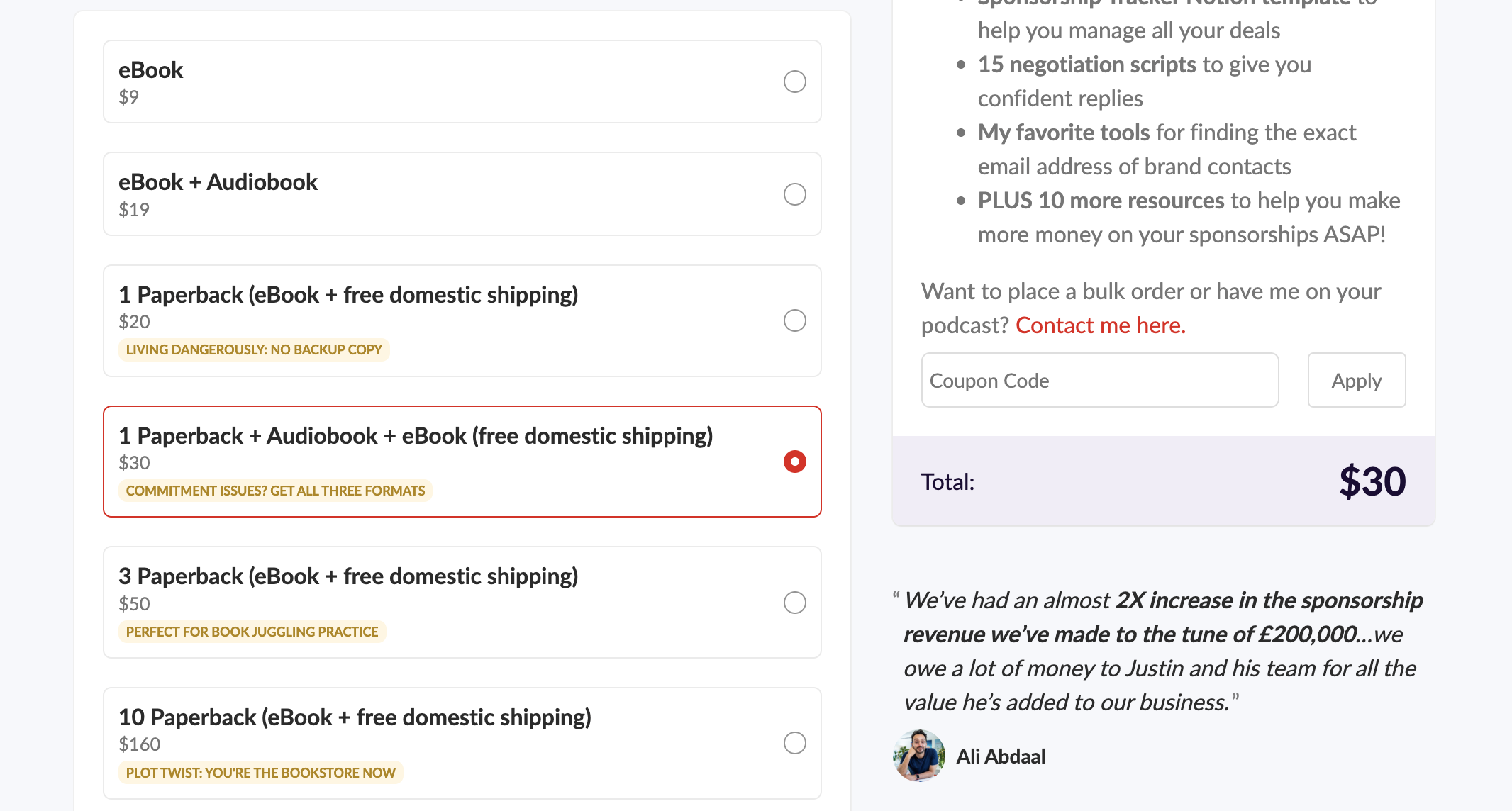
Once you purchase the book, you'll see other upsells for Justin's products and services. He highlights whatever offer he's prioritizing that season, which right now, is a discount trial for his new app Sponsor Mole. Sponsor Mole costs $499 a year for the base tier. In the past, he's shown tickets for his $10k Brand Challenge, a live class he runs a few times a year.
Justin custom built his store using Framer, Spiffy and Lulu. He hired a developer to connect these apps to each other because he wanted full control over everything. Framer is the content site. Spiffy handles the checkout. Lulu prints and ships the books. He talked about his book tech setup on Lulu's podcast recently. The big advantage of owning this whole pipeline is that, when Justin wanted to swap out the call to action inside the book itself from advertising his course to promoting free strategy calls, he was able to update the file himself and have the new version live and available for order within 48 hours.
10,000 copies sold is 10,000 potential clients
Justin didn't set out to become a full-time author. He wants to keep working with creators to help them book better brand deals. Sponsor Magnet has accelerated what was already a super successful sponsorship coaching business. And that's a good thing because the book effectively killed Justin's course which was bringing in $15-20k a month in revenue. He did that on purpose. With the popularization of AI chatbots, he thought his course would be obsolete soon and he was prepared to shift his business into coaching, events and other offers.
The book revenue doesn't entirely make up the course revenue but it has brought higher value clients and faster closing clients Justin's way. He told Matt Briel and Lauren Vassallo at Lulu that one client does 8 figures in sponsorship revenue annually and the monthly retainer from that client alone is more than he made working in corporate. The book also attracts a different set of clients than Justin's digital channels do. "I just did a community session for content creators in the supply chain industry. A lot of these people are not gonna watch my YouTube channel or read my newsletter, but they might read a book or listen to it," he said.
And that new in-book CTA is working like crazy. 80-90% of potential clients booking discovery calls with Justin's team have read the book.
Genuinely believing your book is valuable can help you want to keep selling it
Justin checked all the boxes in getting Sponsor Magnet into the world. He got advanced praise from notable people. He promoted a pre-sale. He went on at least 60 podcasts. He plastered the book all over his channels. He advertised his book on his backpack. That helped him get to 10,000 copies sold. But it's seeing creators put the book into action that motivates him to keep going past this point.
Justin believes his book is valuable and that makes it easy to keep talking about it. It's proven valuable to his readers and it's proven valuable to his business. The frameworks he shares in the book have become the foundation of his other offers, from his $10k Brand Challenge to his live event, Sponsor Games, to his brand deal software, Sponsor Mole. The book is the most obvious starting place for all of this but it also functions alone as a helpful resource to get creators into their first or next brand partnership.
I often think about what the sweet spot is to write a business book you could stand behind the way Justin is able to stand behind his. You need to be far enough along in your business that your methods are well-tested and that you know you want to keep operating around them. You need to be clear on what you want the book to lead to—speaking engagements, clients, more books—because that determines which exact stories you tell inside the book. But even though Justin nailed it on his first try, his approach to book sales and to how the book fits into his business is still unfolding. That makes me believe there's plenty of room to get it wrong and try again. If you don't like something about your book, publish a new edition. If you didn't sell as many copies as you'd hoped, find new ways to promote it. And if you can't figure out where your readers are, you might just need an LED backpack to light the way.
Get Justin's book at sponsormagnet.com and join his free newsletter for creators seeking sponsorships.
Disclosure: Lulu did not sponsor this story, nor did they have anything to do with its production, but they are a sponsor of Revenue Rulebreaker. If you check out Lulu, please use my affiliate link, at no additional cost to you.
Updated October 25 to remove reference to Molly Donlan's milestone tracker because the timeline was inaccurate and Justin inspired Molly to try this for her book launch, not the other way around.
What's your favorite way Justin sold his books? Share your thoughts in the comments.


