

Everyone's got an opinion about AI but it's hard to know whose perspective you should care about. Thousands of entrepreneurs and creators have jumped on the AI train and made it their entire personality—often with no credentials or background in technology. So, when they tell you that you absolutely must join them or be left behind, it's all a little suspect.
Just yesterday, Becca Harpain who runs Inside The Square for Squarespace developer tutorials, commented on my post about this question of who you can trust with "AI has been an incredible tool for me [...] My business wouldn’t be here today without it."
There's more to what Becca said but it struck me as the perfect example of the same generic take we keep hearing over and over again: AI has made me better, faster, stronger. Nothing makes me lose respect for someone quicker than their completely uncritical take about AI. You find AI valuable? I get it. We've heard it before. But you come into my feed to reputation launder something that's complex, controversial and harmful with a glossy statement that sounds like you work as a publicist for Open AI? Now, I'm skeptical of your judgment.
In fact, I'm skeptical of what nearly everyone says about AI. That's why a few weeks ago, I turned to the Legends to ask who they trust when it comes to understanding this rapid forced adoption of a technology. Their answers were compelling enough that I am sharing them in this story.
All the names surfaced below fall into four categories: academics, journalists, tech makers and authors with some belonging to more than one of those labels. None of the names included are people who just showed up to the AI space yesterday.
Special thanks to Guy LeCharles Gonzalez, Stefanie Kruse, Emma Bolton, Theresa Sullivan, Tes Macpherson, Caroline Fay and Hang Xu who shared who they're turning to for AI intel. You might be wondering why you should care who these people trust. Several of the sources they cited were raised by multiple people. Many I had been following for years like Brian Merchant, the DAIR crew and Dr. Joy Buolamwini back from when I worked in tech. I also vetted the list to ensure everyone included has reliable credentials and experience that gives them an informed perspective on AI. But for a little added context, Guy's background is in the publishing industry (books and magazines.) Emma's a former lawyer turned writer and artist. Theresa's experience is in marketing and communications and she's now a writer. Stefanie, Tes, Caroline and Hang all have tech backgrounds.
I went light on including service providers who sell AI services, to keep the list mostly focused on people who are in the business of researching and informing the public about AI—not people selling AI itself—though I did include a few AI technologists who do sell services. The depth of their thought leadership is relevant enough to know about.
Journalists
Karen Hao is a journalist and author who published the bestselling book Empire of AI last year, which details the inner workings of Open AI. Karen has reported tech stories for the MIT Technology Review (where she wrote an early profile of Open AI), The Wall Street Journal and More Perfect Union. She briefly worked as a software engineer and data scientist before she became a journalist. You can follow her work in the press, on Twitter or on LinkedIn.
Brian Merchant is a former tech columnist for the LA Times who went independent a couple years ago to write his own newsletter BLOOD IN THE MACHINE, where he still covers tech, which mostly means AI these days. He wrote a book by the same name which details the history of automation through the lens of the Luddites tracing it to its modern day manifestation of AI. Brian's active on Bluesky and on Twitter. He also had a brief podcast. It's not active anymore but he interviewed Karen Hao and Cory Doctorow last year.
Ed Zitron is one of AI's loudest critics and the go to voice for AI haters. Ed was a games journalist before he moved into PR nearly 20 years ago. In 2020, he started writing about the tech industry in his own newsletter Where's Your Ed At which led to him to create the Better Offline podcast. He's not just a tech commentator. He's an analyst and reporter of what's shaping up in the AI scene, trusted by everyone from CNN to Slate to Bloomberg—and many members of our community who have mentioned his work to me. Ed's podcast and newsletter are super active and he's on Bluesky daily.
Paris Marx is a tech critic, author and podcaster. Paris covers the tech industry at large—which these days includes a lot of AI news—in his publication Disconnect and on his podcast Tech Won't Save Us. He's based in Canada and he speaks a lot about the challenges of the American tech scene versus global tech as well as the political nature of tech. Before becoming a writer and podcaster, Paris was a researcher at the Centre for Media, Technology and Democracy at McGill University in Montreal, where he received his master's degree. Paris is active on social media. Find all the links in the footer of his site.
Academics
Dr. Olivia Guest is a professor of Computational Cognitive Science in the School of Artificial Intelligence at Radboud University in the Netherlands. They've been studying computer science for two decades and they've been publishing papers on computational cognitive modeling—how human psychology translates into algorithms—since at least 2013. In addition to her academic research, she curates blog posts, videos and news pieces into an online library called Critical AI Literacy. She's also active on Bluesky where she shares AI news and analysis.
Dr. Iris van Rooij is also a Computational Cognitive Science professor at Radboud University. Their academic interest is the "computational scope and limits of cognition" and they've been publishing research on that topic for 26 years. Dr. van Rooij writes a fairly active blog, they're cited a lot in the press and they're active on Bluesky.
Dr. Abeba Birhane researches AI accountability and did her thesis at Cornell in the "Challenges and Pitfalls of Artificial Intelligence." She's a professor of AI and the founder of the AI Accountability Lab at Trinity College Dublin in Ireland. You can follow her on Bluesky and you can follow the work of her lab too.
Dr. Damien P. Williams is a professor in Philosophy and Data Science who studies technology and society from a philosophical POV. He's currently based at the University of North Carolina at Charlotte where he teaches courses on data ethics, science fiction and the implications of AI. He has a blog, though it's not super active but he's active on Bluesky.
Shae Omonijo is a PhD candidate in the history department at Harvard where she examines critical thinking in the age of AI. She runs Analog Social which helps tech founders with their well-being. Theresa Sullivan, who shared Shae's work, said she goes "beyond the AI enthusiast or AI hater binary." Shae writes a newsletter about AI and the future of work, she publishes a series on YouTube and she is active on LinkedIn.
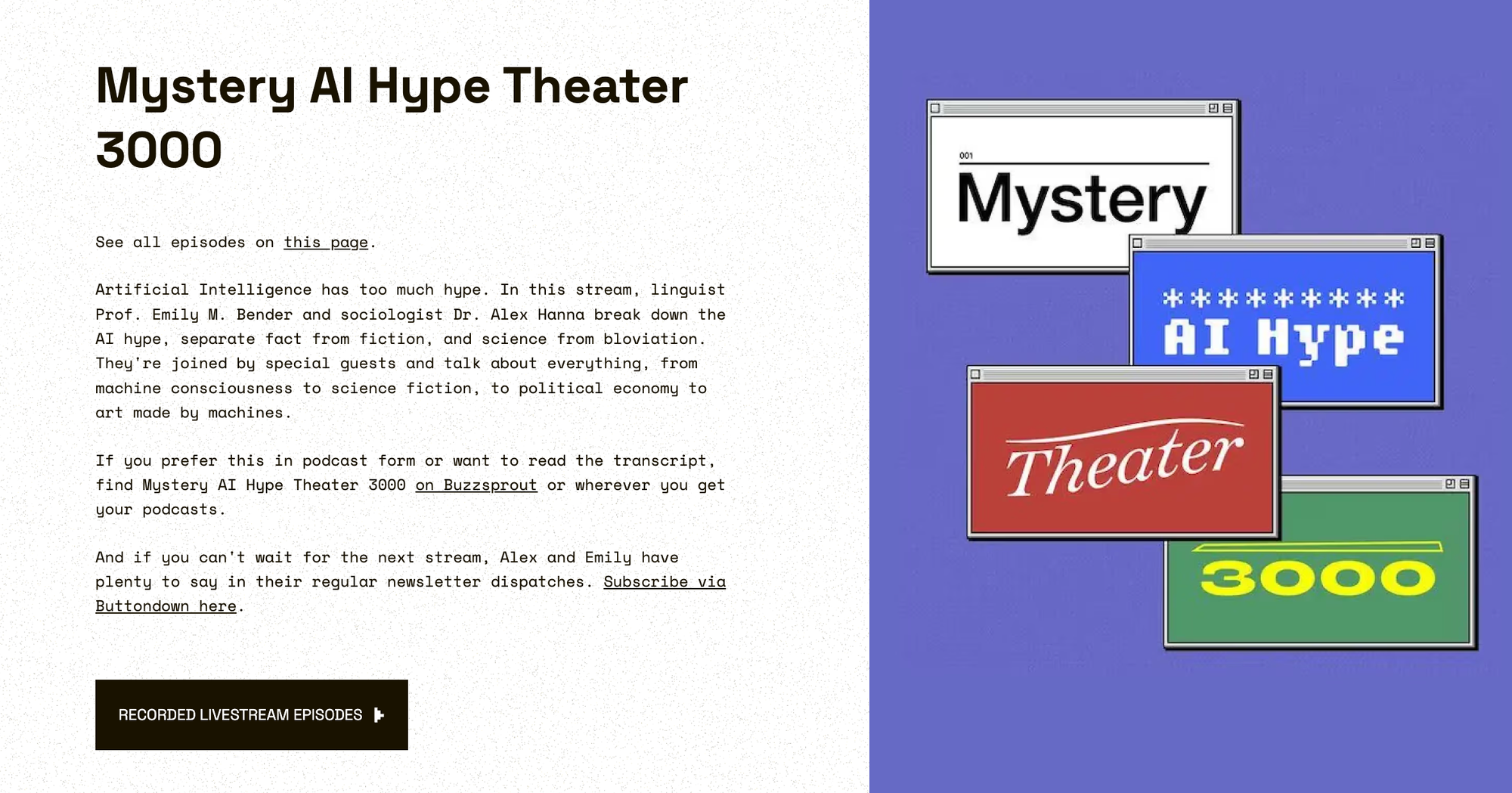
Dr. Timnit Gebru, Dr. Emily Bender and Dr. Alex Hanna are some of the most famous AI ethicists and they've worked closely together for years. It was a paper that Gebru and Bender wrote that resulted in Gebru being ousted from Google, where she was leading Google's Ethical AI team. Hanna also worked on that team. In the wake of that very public departure, Gebru founded The Distributed AI Research Institute (DAIR) where Hanna is now Director of Research. Last year, Hanna and Bender co-authored a book called The AI Con and they co-host a podcast called Mystery AI Hype Theater where they myth bust the AI hype cycle. Gebru's background is in computer science, Bender's is in linguistics and Hanna's is in sociology, AI and machine learning. They're all active on LinkedIn and Bluesky and the podcast is a good way to keep up with what they're paying attention to.
Dr. Joy Buolamwini is a computer scientist whose 2017 thesis at MIT unveiled the significant racial and gender bias in AI facial recognition. She's the founder of the Algorithmic Justice League (AJL) which exists to raise public awareness of the harmful impacts of AI bias and to equip advocacy campaigns with the research they need to change policy. Tes Macpherson, who highlighted Joy's work, said "I spend a lot of time thinking about whose knowledge gets encoded, who owns it, and who gets left out of that conversation entirely." That's exactly what Joy researches and writes about. You can follow AJL on Instagram and on YouTube.
Tech makers
Meredith Whittaker is the President of Signal, the privacy focused messaging app and the co-founder of the AI Now Institute, which is an independent research group that challenges the big tech AI agenda. She worked at Google for a long time leading product and engineering teams. She was an advisor on AI to former FTC commissioner Lina Khan and she's done tech-related human rights work with the ACLU. She's active on Twitter and Bluesky.
Dominic Wellington is the Director of Product Marketing at SnapLogic, which is an enterprise AI tool. Previously, he led market intelligence at MongoDB. Beyond his private sector tech resume, has taught data science at the master's degree level as an external instructor at Università degli Studi di Milano in Milan, Italy. He writes frequently about AI on his blog, which Guy LeCharles Gonzalez said he appreciated for "insightful takes that skew slightly more pro-AI." Dominic is active on Mastodon, Bluesky, and LinkedIn.
Madalina Buzdugan combines sustainability strategy with ethical AI adoption, helping organizations marry their environmental and sustainability goals with advancing technology. Her background is in climate tech, travel tech and communications. Stefanie Kruse, who flagged Madalina as a good resource, shared a specific talk that she gave recently on how to use AI intentionally, while being aware of its harmful side. Madalina can be found on LinkedIn.
Ha Phan is the outgoing Director of Design Tech at Zillow. She just gave her notice to retire, but she's an accomplished builder who holds many AI-related patents. She's worked with machine learning since at least 2014 when she was at GoPro developing automated video editing. Hang Xu, who recommended Ha's work, told me, "Most designers talk about AI in a fairly shallow marketing way which basically amounts to running agents for vibe coding," but Ha's work is more substantive. Ha has been active on LinkedIn where she brings a healthy level of critical thinking to detailed depictions of her workflow but there's no telling whether she'll stay online once she retires.
Paz Perez coined the term AI model designer, which is the practice of working directly with engineers to shape how users interact with AI beyond user interfaces. She teaches designers how to create and adjust AI model behavior and she developed an educational training program to that effect when she was at Google. Paz has been working in AI since 2020 when she was at Autodesk. She's independent now and she recently started a newsletter called AI in Practice.
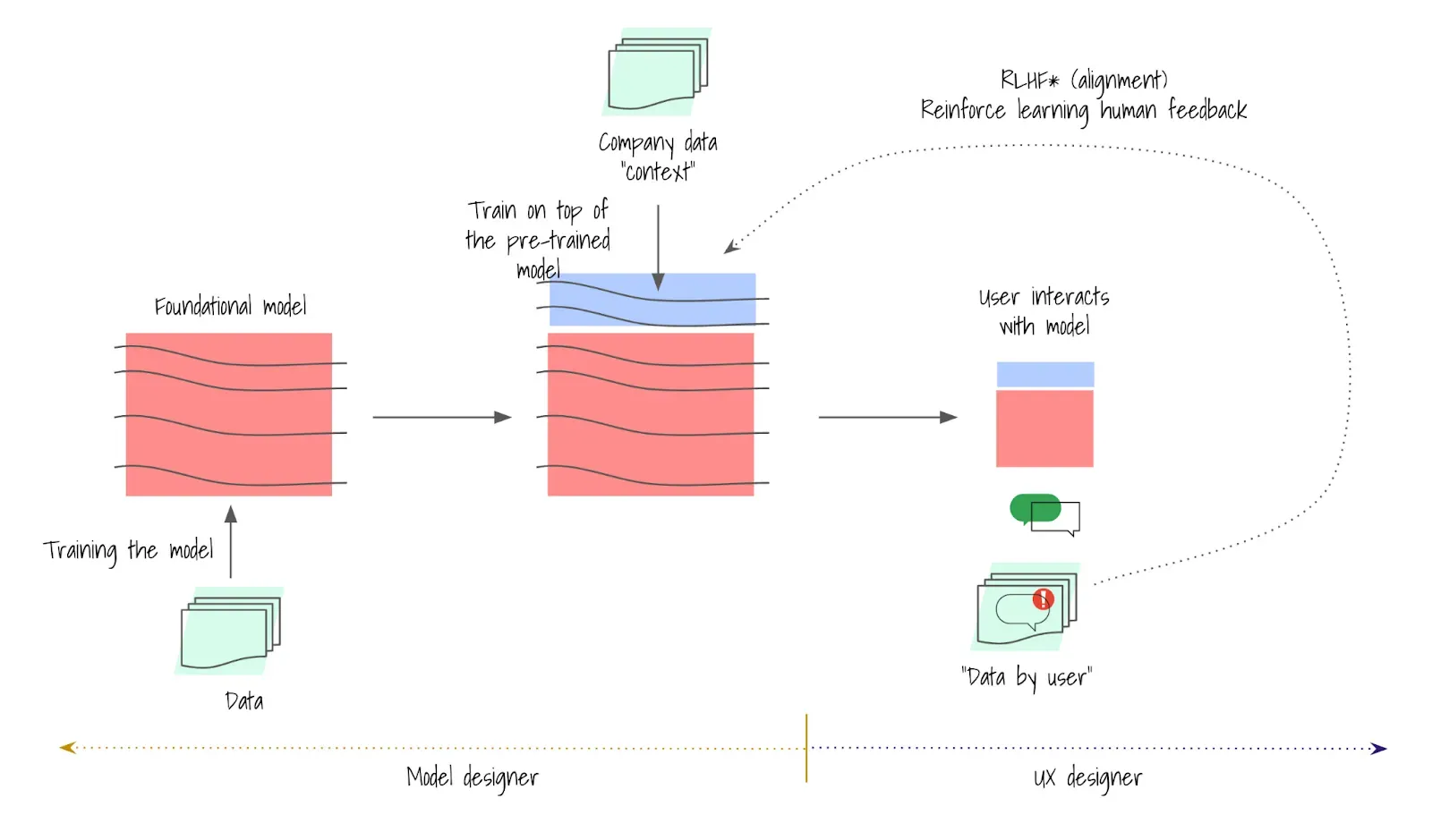
Kyle Alexander is also an AI model designer whose background is in content design for fintech companies like Fidelity, Credit Karma and Block. He recently partnered with Legend Hang Xu on an AI model design workshop in New York City and he speaks internationally on the subject. Hang pointed out that, contrary to learning AI prompting or vibe coding which can become irrelevant quickly, understanding how the computational models are put together is a more durable skill. "Nobody is paying for prompt engineers or prompt recipes in 2026," Hang said. Kyle's work, like the work of Paz Perez and Ha Phan, is about the underlying technology. The best way to follow Kyle's work and his writing is on LinkedIn.
Tommy Geoco is the only Legend included in this list and Hang Xu insisted I include him because, with Tommy's work, "you learn a lot about how AI companies are marketing themselves and how that's affecting our work," Hang said. "Our work" being the tech industry and more specifically, how designers are operating. Tommy's a software designer and tech founder turned media maker who produces documentary style projects that cover what's going on in tech. He partners frequently with AI tech companies like Perplexity, interviewing their teams and experimenting with their tools before others start adopting them. Tommy publishes regularly on YouTube, on TikTok and on LinkedIn.
Authors
Abi Awomosu is the author of the recently published book How Not To Use AI, which reframes how to use AI without letting AI use you. She calls her work "The framework for staying sovereign in the AI age." Abi's background is research, consumer insights and analytics for companies like eBay, Uber, and Meta. She's currently Director of Data & Insights at Artsy. She's worked in tech for 20+ years. You can follow her newsletter or find her on LinkedIn.
Dr. Vivienne Ming is the author of Robot-Proof: When Machines Have All The Answers, Build Better People. She calls herself a "professional mad scientist" and she's created a variety of AI tools including ones for dementia, TBI, and postpartum depression. Her PhD is in Computational Neuroscience and Psychology from Carnegie Mellon and she's operated as a science advisor for many tech companies and foundations. She writes an active newsletter where you get pre-releases of her research and op-eds and curated research from elsewhere. She's also on LinkedIn.
Grace Blakeley has written several books, the most recent of which is Vulture Capitalism: Corporate Crimes, Backdoor Bailouts and the Death of Freedom published in 2024. She's an economics commentator who has contributed to the New Statesman and she's a staff writer for Tribune. Grace is a democratic socialist, a member of the Green Party and a fan of Brexit. She writes about capitalism, corporate greed, worker power and AI on her newsletter.
Cory Doctorow is a science fiction author and journalist most recently known for coining the term "enshittification" about the devolution of tech. He's written a ton of books and has contributed to many famous magazines and newspapers. His work and ideas have been featured everywhere from The New Yorker to VentureBeat. He's an advisor to the Electronic Frontier Foundation (EFF) which advocates for privacy and human rights related to technology. He writes a blog which is mostly a list of daily links, many of which are currently about AI.
The AI craze has caused so much group think and bandwagoning, it can be demoralizing to witness. Everyone cited above is an independent thinker who has researched, examined and developed their own conclusions about AI over many years. Some of them are skeptical, some of them are optimistic, but all of them are engaging in a clear eyed way with a deep understanding of what they're getting into.
Like I said earlier, I purposely chose not to include many AI service providers though I believe that's where many entrepreneurs are getting their primary information about AI. I understand that AI service providers can offer helpful guidance, but I do not find their information to be very credible as they rarely have a depth of expertise in how the technology functions and how the industry power dynamics or economics work. Their business models are the definition of building on borrowed land. I might even say it's like squatting on stolen land. AI is in an extremely volatile state where it is floating on piles of investor cash and public goodwill. There are a lot of showstopping problems that need to get solved for it to become a permanent, reliable fixture in our lives, like where they're going to build all these data centers no one wants and who's going to pay for the actual cost of AI computing.
While we navigate those questions, the 24 people named above can help us make sense of what's happening. Check out their research and use their analysis to inform the decisions you make about how much to incorporate AI into your world. Nothing is inevitable. Nothing is required. Make your own choices and follow smart people who do the same.
Want to add more good sources for us? Share them in the comments!


