


Added Jessica Lackey's story on fractional framings (October 8)
You've left your corporate life behind to have more freedom choosing your clients and your projects, but there's one thing you need to solve. What do you call yourself now that there's no org chart?
Titles carry a surprising amount of weight. They offer search terms clients use to find you on LinkedIn, Google or ChatGPT. They give language to your referral partners for how to talk about you with potential leads. And they shape how client teams see your role once you begin an engagement. No wonder we're always looking for better words to describe what we do. Our opportunities and income hinge on it.
One title has blown up in the last few years: Fractional leader. Former executives shifting into self-employment add the label in front of their previous title. Fractional CMOs, Fractional CFOs, Fractional CTOs, even Fractional CEOs are everywhere now. An article in Harvard Business Review stated that, in 2022, a mere 2,000 people used fractional as part of their job title on LinkedIn. Two years later, that grew to more than 110,000 professionals.
Despite its rise in popularity, entrepreneurs debate whether or not the fractional title is actually helpful or hurtful to your business development. Some say it helps them get found and communicate their role faster. Others say it makes structuring engagements harder and it confuses clients unfamiliar with the term.
The fractional framing works, but only for select groups of people. I wanted to know more about who those people are and what about them or their clientele makes fractional the right fit. I turned to both entrepreneurs who identify as fractional leaders and those who have scrapped the title to understand when and why you should choose it.
How people become fractional executives
Jennifer Yates started using the title Fractional Operations Leader when she went out on her own in 2023, thanks to a brand strategist who encouraged her to add it for SEO purposes. But it didn't feel quite right, especially after she joined a community called Fractionals United, which had a clearcut definition of the term.
"At the time, [the founder of Fractionals United] argued that a person had to have held the title of the position in a previous role in order to be considered fractional in the same role. For example, if I was going to call myself a Fractional COO, I should have been a COO in a previous role," Jennifer said.
Fractionals United was created by Karina Mikhli, who has used Fractional COO herself since 2019, according to LinkedIn. Karina held the COO role at several companies full time before going independent. But for Jennifer, her highest title in corporate was VP of Business Operations. Did Fractional COO fit her still? She's let Fractional Operations Leader remain on her website, but she doesn't use it on LinkedIn and she told me she never calls herself fractional or heard her clients refer to her that way. She leaves it there for discoverability only.
Former executives aren't the only ones claiming these titles though. Founders have been dabbling in the fractional world too.
Caroline Fay said hiring part time help was discouraged when she was a founder in 2017. But now that the fractional framing has taken off, it's seen as "smart and pragmatic" to bring on fractional leaders in today's tech landscape. "A startup team can have access to bonafide expertise without a full-time price tag," Caroline said. Since exiting her own startup, she's been a founder coach and mentor as well as an entrepreneur-in-residence. Within the last couple years, Caroline began using Fractional Go-To Market Exec and Sales Advisor because her startup clients are seeking that out.
There is also such a thing as a Fractional Co-founder. A serial founder based in Denmark who goes by the name Milo AI has had multiple exits with his own startups. He decided he wanted to play the field on more than one endeavor so he began operating as a Fractional Co-founder seven years ago. Milo's taken that position in at least five different companies. He told me it means, "working part time, taking less equity, and having less responsibilities, but bringing 10 years of experience as a founder." Tangibly, Milo would help teams fundraise or nail customer acquisition and then, he'd move into more of an advisory role for the startup—keeping his equity but reducing or removing the salary.
No one is governing the use of fractional titles so while previous executive or founder experience are common paths into fractional leadership, plenty of consultants are adopting the label because it makes sense to them and their clients.
When fractional helps you
If your clients are searching for fractional
Search engine optimization was a key reason people told me they leaned into fractional titles. Meghan Hardy, who does hands-on marketing and growth work for consumer brands, told me she's gotten more inbound interest from clients since putting "Fractional CMO" in her LinkedIn headline. Likewise, project Manager Marissa Taffer added fractional in front of her title to her LinkedIn and her website a few years back when the term began taking off. "I wanted to make sure I was getting found when people were looking for fractionals in the project management space. It IS a good description of what I do.... but I am not married to it," Marissa said.
Whether or not your clients would search for you with the keyword "fractional" is industry dependent. Fractional executives are common now in tech, e-commerce, marketing, finance, manufacturing and nonprofits. Marketing consultant Chris Lam told me she's found it works with boutique agencies and social media professionals, but that other types of small businesses don't get what it means and aren't looking for help that way. Communications, marketing and project leader Allison Boaz doesn't use fractional in her title, but adds it as a service offering. She said if clients are using that term, they'll recognize it in her materials and if not, she often includes "part time" to clarify what fractional means to her.
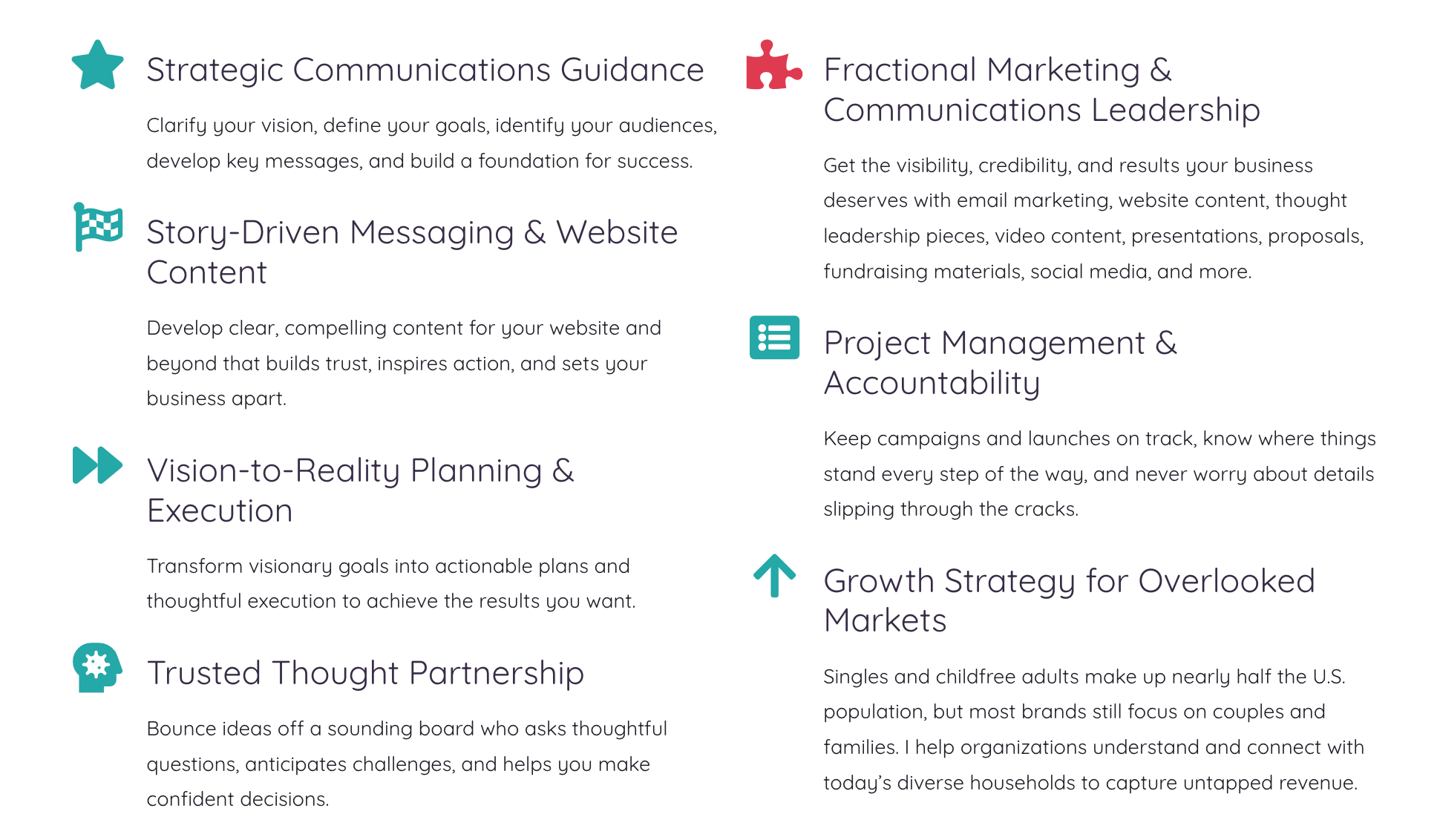
Communications advisor Ted Fickes had a small warning about fractional roles in the nonprofit sector, calling them a "check engine light." He says nonprofits and foundations sometimes search for fractional help because they can't hire or retain full time talent. Ted recommends doing your due diligence to find out what's under the hood before agreeing to a gig. That's probably applicable advice for all industries hiring fractional execs.
If your role is common in the fractional space
Some roles lend themselves to the fractional frame better than others says Ashley Jefferson who runs a community in New York called Founders, Funders, & Fractionals. "People are warming up to certain functions a lot quicker than they are to others. [Fractional] CFO and CTO will continue to be something where people just get it," Ashley said.
Fractional CFO is one of the longest running fractional titles according to several blog posts I read. They make up nearly 20% of the fractional market, followed by CMOs, CEOs and COOs. Fractional CTOs appear to be a smaller slice of the pie, but I wonder if that's because there's a technical bar to becoming a CTO that doesn't exist in a lot of the other functions, meaning that there's just less of them out there.
If it helps you communicate your role faster
Laura Green told me she uses the fractional title mostly to communicate externally on behalf of clients. "If I'm sending an email on [a client's] behalf to a contractor or someone external, I want them to know that I'm not dedicating the same capacity to my role and therefore might not respond at the same cadence without making me look like a poor performer or making [my client] look like they don't have their stuff together," Laura said.
That fractional title is COO, but Laura doesn't use it in marketing to clients. She prefers project-based framing which makes more sense to her nonprofit and social enterprise clientele.
For Kate Dole, it's more about internal communication beyond her point of contact. She uses the term Fractional Growth & Brand Leader which helps teams get quickly where she fits in and how to work with her. Kate said, "The key stakeholder doesn't care as much as the internal team does. Anecdotally, it's also seemed to help people understand I'm not 'just a consultant.' I'm here to dig in and help get stuff done."
If it helps you price better
Naming yourself as a fractional executive could set a more clear pricing expectation with potential clients, some leaders say.
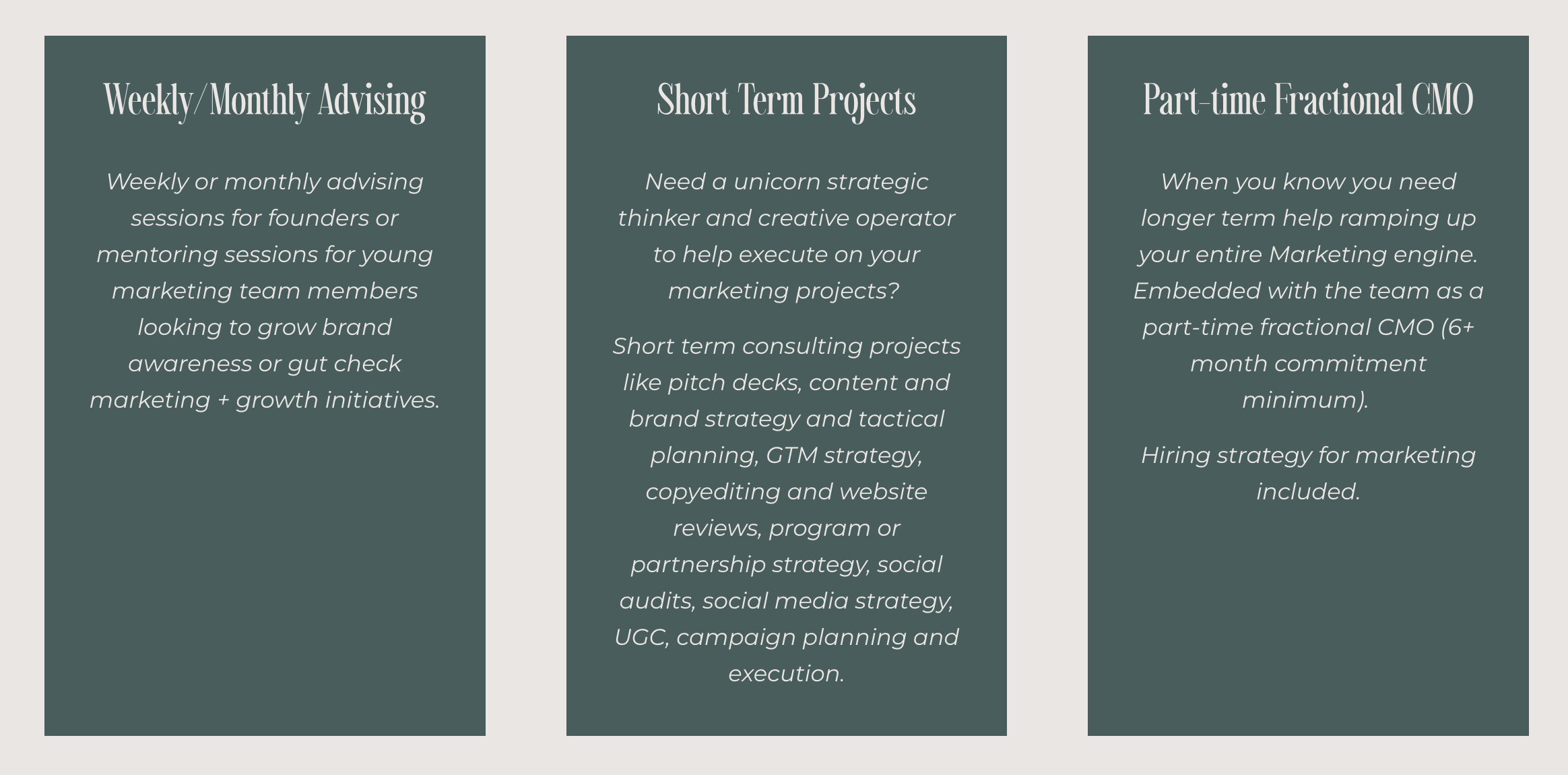
Tina Bar-On is a Fractional CMO for ecommerce brands and she said that title "automatically filters for a specific price point." On her website, Tina augments the fractional language with other keywords like "partner," "strategic guidance" and "longterm," which speak to the type of engagements she's looking for. She also gives concrete examples of the kind of work she does like decision-making sessions, data focused audits, and campaign reviews—labeling these as activities she would do if she were your full time CMO.
You might find that owning your expertise as a fractional exec helps you more confidently claim and market your value. That was the case for Ashley Whitlatch who traded the contractor title for Fractional CMO on the advice of an advisor several years ago. "She reminded me I wasn't just a short term contractor, but an experienced global executive with valuable expertise to offer my clients. It was a good reminder to not undervalue myself," Ashley said.
When fractional hurts you
If there's a higher value framing
As ubiquitous as fractional is becoming, some people who could grab onto that term are choosing more descriptive language. They see bigger benefits from setting fresh expectations with clients about how they work than in latching onto the trend.
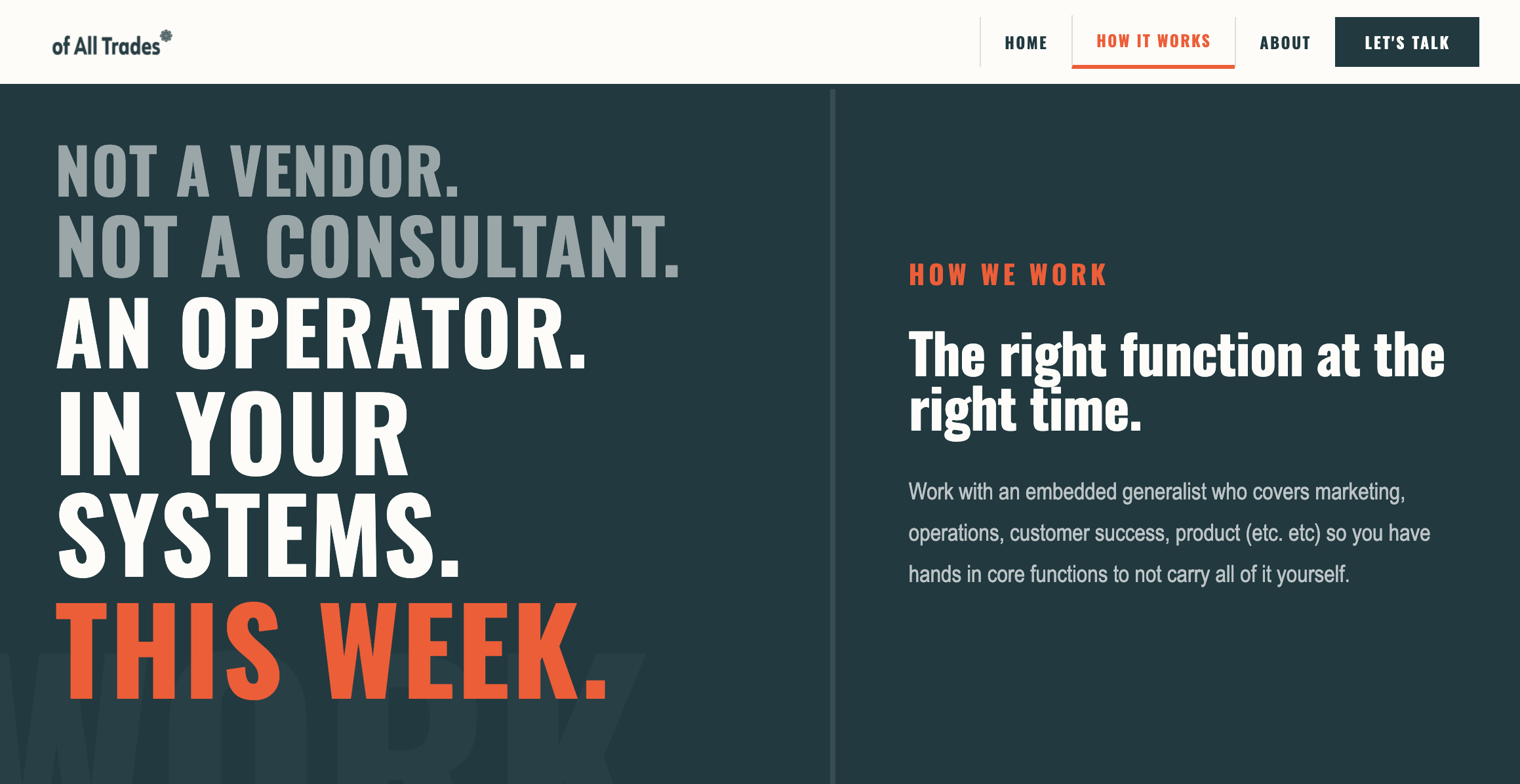
When Britt Gage founded of All Trades (oAT), she deliberately avoided the word fractional and instead describes their work as "integral." of All Trades places "embedded generalists" within client teams across a range of functions including marketing, operations, sales, product and customer success. Britt says they're not an agency, not a consultancy and not a marketplace. It's a way of operating that is unique to of All Trades and therefore defies standard categorization. Britt and her team assess a client's needs, develop a scope of work and choose the right operator(s) for that client to work with. oAT avoids hourly pricing and putting resource management on the client's shoulders, instead opting for regular check-ins where clients can change what they need at any time.
I asked Ashley Jefferson if she was seeing any new titles or language popping up in her fractionals community and she said she's hearing more outcomes-based messaging around metrics or results. Ashley said even if you use the fractional title, it's not communicating enough yet to hang your business on. "It's becoming increasingly more important to have a point of view," she said. She recommended understanding what specific impact or transformation you're creating with your clients and giving language to that in your marketing.
If it creates mismatched expectations
Jessica Lackey used the Fractional COO title for three years before she realized it conflated too many ideas together and wasn't clearly communicating to clients what they would get. Jessica's background is in consulting and corporate leadership and now she helps other people make the leap from corporate to self-employment through her programs at Deeper Foundations.
As the adoption of fractional grows, some people use it to elevate their freelance title. Some use it to mean strategy without execution. And others use it to mean both strategy and execution. "The problem is the title distinguishes none of that for the buyer. So they often default to the most demanding version—embedded, accountable, always available—and feel it as a broken promise when what you're actually delivering is advice or a project," Jessica said. She pointed out that the term fractional focuses on hours not outcomes and said you might be better off framing around "projects, milestones, or value rather than hours."
Management Consultant Brian Kerr agrees. He's steered clear of the term because "nobody could agree on what it meant besides ‘cheap.’" If you find using the keyword fractional means you have to do more client education than usual or you have new boundary problems during engagements, it might not be worth the discoverability you're getting.
If your clients are searching for something else
On the flip side of making you more findable in search, fractional can also take up space where a better keyword belongs. That's what Matt Rosenberg found.
Matt tried both Fractional CMO and Fractional Head of Marketing on LinkedIn as recommended by a headhunter friend but found that those labels reduced inquiries from clients. He said, "I concluded people want my help, they don’t want to feel like they’re taking on a full time part time executive." Like Allison Boaz, he still uses the fractional language deeper in his profile, but his main title is now Marketing Consultant.
Should you add "Fractional" to your title?
If your clients are searching for fractional leaders, it's worth trying. It can make you more easy to find, it can raise your pricing expectation and it can communicate what you do quickly. You can get a sense for how widely used fractional is in your space by searching for other fractionals who serve your same clientele or industry.
But if you're not in an industry where it's commonly known, fractional framing could hinder your ability to connect with the right people. You might be better off using the descriptors your clients are seeking out or developing your own language for how you work like Britt Gage and Ashley Jefferson shared.
One thing is clear to me after talking to these sixteen people about the fractional trends: it's easy to experiment with your title and find out for yourself. You can add it on LinkedIn or on your website, see how inquiries shift, learn what clients believe it means and decide whether it's helping or hurting you with your own data. If it doesn't work, it's quick to swap it out. Other related labels you can try on include consultant, advisor, interim, embedded or [craft]-in-residence.
Like any term that takes off, fractional elicits strong feelings especially from its haters, but your title is just the gateway for a conversation. If adding fractional helps you have more of the conversations you want to have, then it's the right move for your business.
Read more about fractional framings and how to diagnose fractional drift from Legend Jessica Lackey:
 Jessica Lackey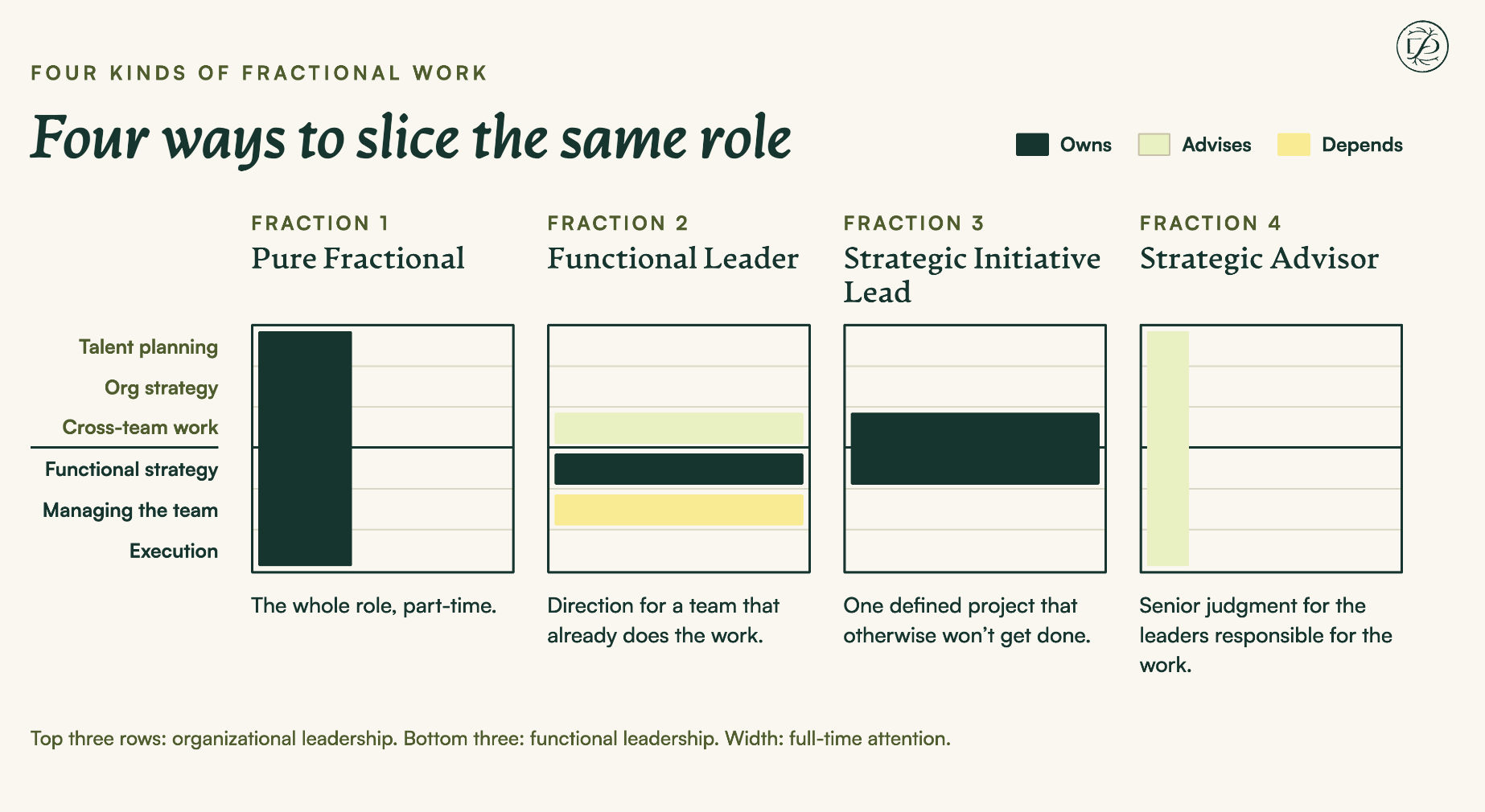
Does the term fractional help or hurt with your clients? Share your take in the comments below.


