Toward the end of a networking lunch, the editor I’d been chatting about the publishing industry with asked what I was working on. I described my latest essay, on my closeted honeymoon and awkward attempts to find queer community in Cambodia's gay bars. “Sounds interesting. Send it to me when you finish,” she said.
I polished the essay and sent it off with low expectations. When she accepted the essay for Longreads, a paying market with major clout in the literary world, I was over the moon—but as it turned out, that yes was just the beginning.
An editor from AFAR read that piece and reached out to see if I would write a similar travel essay for them. Soon, invitations from other editors followed. As a newbie travel writer with a couple bylines to my name, I was stunned. Not only were editors of dream publications coming to me, without me needing to pitch them first, they wanted explicitly queer content.
At first, I was focused on money and bylines, two things any freelance journalist needs for a sustainable career. Over time, I realized that if editors were coming to me for these stories, that meant they had nobody in-house who could tell them.
For the first time in my freelance career, I had the advantage.
So I doubled down, looking for more queer travel stories to tell. Within a couple of years I had written for nearly every major travel magazine and set my sights higher. One story wasn’t going to change much—at times, it felt like a token effort during June—but a full-length book could.
–
At my first job after college, coworkers took me aside to suggest I wear something more feminine. Others ignored me outright.
One in five LGBTQ+ workers are told to wear something more gender-typical, like I was, and over half have heard gay jokes at work, according to HRC's 2018 report, A Workplace Divided: Understanding the Climate for LGBTQ+ Workers Nationwide.
Things improved somewhat—fewer gay jokes, similar levels of gender stereotyping—but the latest workplace report from HRC shows that queer workers are retreating from being out at work, a reasonable response to the ongoing political scapegoating.
When LGBTQ+ people experience discrimination at work, as I did, we learn that work is not a safe space to be openly queer or gender nonconforming. We learn to compartmentalize or hide, which takes a toll on our wellbeing.
I tried all kinds of different workplaces, seeking a better fit, before eventually turning to self-employment.
Freelance work gave me a buffer from unhealthy, cisnormative workplace cultures, but even when I was my own boss, I hid my queerness from clients, internalizing that was the safer choice.
Being valid professionally for my queerness felt strange, but also empowering.
–
To sell a nonfiction book on proposal, you need a book outline, two sample chapters, and a marketing plan that defines your book’s audience and how you’ll reach them.
Contrary to what you’d think, the writing isn’t the most important part of the proposal. Instead, the marketing plan is.
Publishing is a risk-averse industry, particularly when it comes to marginalized communities.
For queer authors, this means going above and beyond to demonstrate that there is an audience of eager buyers for your book.
It means anticipating coded rejections from cishet agents and editors—remarks like "I just didn't connect to the story" or "I don't know how to market this" hit differently for marginalized authors, who have to thread the needle, crafting authentic stories while appealing to the tastes of the mainly white, cishet industry gatekeepers who can grant or deny us access.
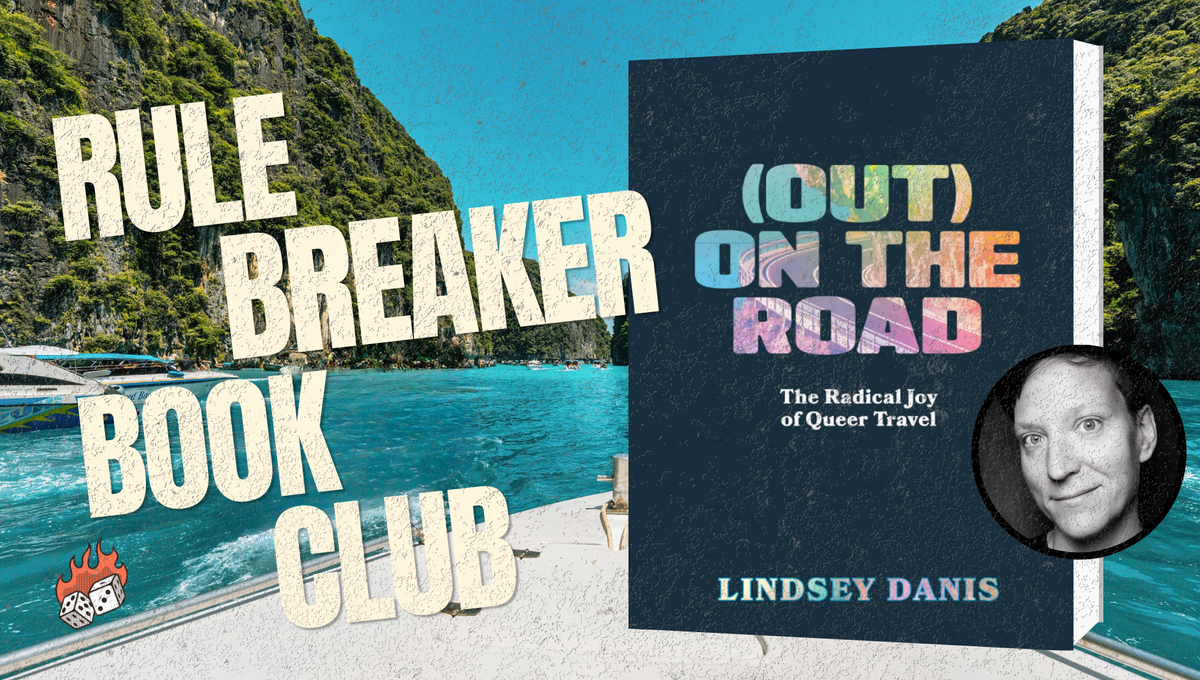
(Out) On the Road is the fourth book I queried and the first book I published, but it's actually the second publication offer I received.
I turned down that previous deal because the publisher wanted to pigeonhole my book as "lesfic" (lesbian fiction) and warned me not to get excited, as the market was small for that. Sensing a bigger audience than the print-on-demand, straight-to-KU deal they were offering me, I said no, had a good long cry about whether I'd ever get another chance, and kept on writing and querying.
This isn’t a story of overnight success, it’s a story of staying in the game long enough to get a lucky break, and making good use of the waiting time.
It took years to pull my book proposal together. I took my time because I knew I’d only get one shot to send the proposal around, and if no agents or publishers took it, my idea would be dead. I spent that time refining my ideas into the strongest possible form, organizing loosely-related themes and chapters into a narrative arc. I got clear on my whys: why this needed to be a book, rather than a string of one-off articles, why I was uniquely qualified to write it, and why now was the right time.
Want the exact questions that helped me get clarity? I turned them into a book proposal worksheet for aspiring authors, and you can get those here.

My bylines gave me legitimacy, and I turned to data to make the case that a large, underserved audience of LGBTQ+ travelers exists. While LGBTQ+ identities aren’t always asked about on surveys, data from Gallup on LGBTQ+ identification by generation and LGBTQ+ market researchers on LGBTQ+ travel spend helped me confidently make the case for my book.
I finished my book proposal, sent it out to literary agents, and was signed by one of the first agents I queried.
–
Flash forward eighteen months—yes, publishing is slow—and my book is now published.
I can't go back into the closet professionally, and even in the current political climate, I would not choose to.
There's privilege in this, of course. Not every queer person can afford to make this choice.
Being queer built the career I have now. It gave me a distinct competitive advantage that I leveraged to achieve my lifelong dream of writing and publishing a book.
These days, I've been reflecting on how my queerness is a secret workplace strength.
Entrepreneurship is filled with people who've opted out of traditional jobs, including those who didn't fit in because of who they are.
Queer people are inherently creative. We question our identities. Then we question everything else we’ve been told is true.
We grasp that there are not two ways of being, but in fact multitudes, and that it isn’t a question of “right or wrong” morally, but what is right for us. Often, we hit upon a label that feels perfect only to discard it in favor of a more affirming choice.
This internal questioning teaches us to be far more flexible mentally than most people. As a result, we grasp possibilities other people do not.
In an episode of the “Think Queerly” podcast called Why The World Needs Queer Creativity Now More Than Ever, host Darren Stehle talks about the rise of Christian patriarchy and rigid ideology around sex and gender roles. The natural instinct is to fight and protest, but Stehle suggests that what is needed instead is queer creativity. The world needs the openness and acceptance queer people have found in their own lives. Society needs queer leadership.
Queer people do business differently, in all sorts of ways.
We may be early adopters or visionaries, diversify our income streams out of self-protection, or see opportunities others miss because we think outside the boxes.
We are comfortable with dualities and paradoxes, which means we’re less likely to be threatened when things shake out differently than we expected. We know calamities are survivable, because many of us have survived losing friends and loved ones on our journeys.
We rewrite the rules. Offer us two options and we invent a third that suits us better.
In my book there’s a quiz, and I fought with my publisher to include a choose-your-own-adventure option for readers that didn’t love any answer, explaining that this kind of self-determination was critical to the LGBTQ+ community, and forcing readers into prescribed options would alienate them.
I don’t love the word resilience, because it glorifies a coping mechanism LGBTQ+ people shouldn’t have to fall back on, but in the professional sense, it’s apt. Early experiences of bias can make queer people wary of trusting others, but they also give us grit.
While I want better life outcomes for queer people—for all marginalized people, who endure discrimination because of who they are—I believe queerness teaches valuable skills, including resilience, flexibility, determination, and creativity.
Applied to entrepreneurship, these qualities can help us succeed beyond our wildest dreams.
You don’t have to lead with queerness as I unexpectedly did, but let it show up more in how you work. It might change everything.
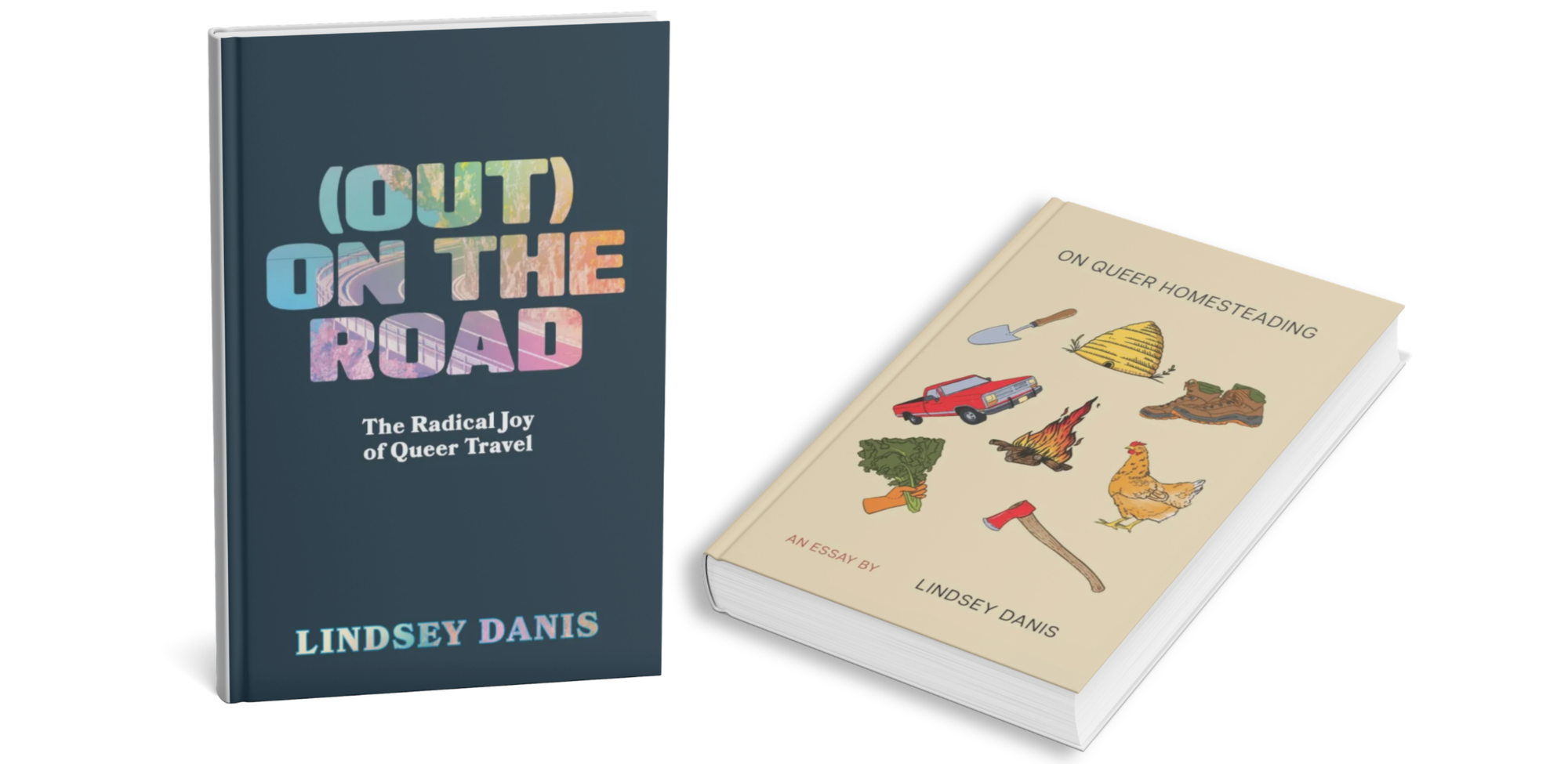
Lindsey Danis empowers LGBTQ+ travelers to understand and advocate for their needs and plan incredible adventures while feeling seen, heard, and supported. Lindsey is the author of (Out) On the Road: The Radical Joy of Queer Travel (May 2026, Ig Publishing). Lindsey's essays have appeared in AFAR, Condé Nast Traveler, Longreads, Eater, and other publications, received a notable mention in Best American Travel Writing, and been anthologized in No Contact: Writers on Estrangement and Nourishing Resistance: Stories of Food, Protest, and Mutual Aid. Lindsey lives in the Hudson Valley of New York. Learn more about Lindsey's work at lindseydanis.com.
Watch our discussion about Lindsey's book (Out) On The Road
 Lex Roman