

Story update 5/18/26: Thanks to Scott Walker's comment, we got a bit more info on how Annie P. Ruggles's offers gift seats in her events. Find that answer in the comments.
I do a lot of work for free. You probably do too. Free phone calls. Free emails. Free social posts. Free blog posts. Free consulting on accident. It's exhausting and I'm always left wondering, "How much of my time should I give away for free in order to at some point, hypothetically, get paid?"
I've noticed that a lot of the Legends host regular free or low cost events as a way to grow their customer base. It's an intriguing way to market because it's more valuable than a single social post or an email. You can build trust with people faster because they see you face to face and they can hear you speak off the cuff. All this AI bullshit has made scamming and stealing the norm and everyone is on edge about who they can actually rely on.
But events are a lot of work, even if you host them online. And just because you charge money doesn't necessarily make them profitable. People have told me, "Give free value and it will return to you." In 16+ years of hosting events myself, I have never found that to be true. I've learned you need to have a plan for how your free labor will actually pay off or people will bleed you dry and say thanks for the memories.
Given that others seem to have better experiences with the free to paid pipeline of events, I went in search of answers. I reached out to 11 entrepreneurs from our community who have made events a big part of their business development strategy and asked them exactly how their events are leading to paying clients and members.
What kind of events they are hosting
One of my big mistakes with events has been trying to change up the style too much. Too many formats is tiring for me and it deters repeat attendees.
That's the first thing I noticed about the types of events these entrepreneurs are hosting. They've each developed a formula, a set of event formats that work for them that they repeat over and over.
In-person experiences
For business strategist Nedra Rezinas, it's a free monthly networking session she holds in person in Portland called Quiet Networking. Nedra specializes in helping introverted businesses owners and she focuses on attracting that same crowd to her free meetup. She told me, "Being in-person, folks immediately can sense my energy and who I really am. Going to 1 in-person meeting is equal to 5 online meetups!"
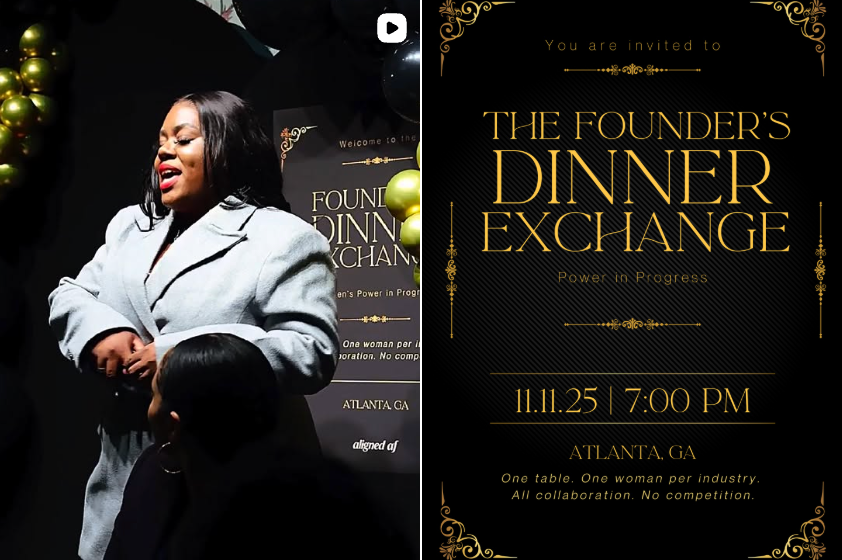
Naeemah Jade also hosts her events in person because she wants to "build environments where people could relax a bit, have honest conversations, and genuinely get to know each other." Naeemah runs a coworking space in Atlanta called The Lola and she is also an accountability coach and facilitator. Her events are rarely small. They are more like immersive experiences. She partners with brands and local businesses to produce networking breakfasts, founder dinners, coworking days, wellness experiences, and leadership conversations. Sometimes these have a ticket price and sometimes they're free. Her event formats are varied but she does re-run the same style of event more than once so people know what to expect when they return.
Co-hosting workshops
Co-hosting workshops that demo your services was a common approach to make the workload of promoting and hosting lighter. Web designer Stacey Nicholls and creative director Sarah Giffrow recently co-hosted a session on The Social-to-Website Handoff, covering both their disciplines (web and social marketing) and how their services work together. Both of them team up frequently with other service providers or with past clients, reusing the same presentation or altering it slightly for different audiences.
Chris Musei-Sequeira co-hosts events too but he works with the same set of colleagues using the same monthly event format called the "Offers and Needs Market," which comes from the Post Growth Institute. The idea is that people practice their pitches and make asks of the group, though Chris noted the primary goal is not to drive sales out of it, it's to kickstart new business relationships.
Cohort programs
One of the most involved event structures I learned about was from nonprofit strategist Abbey Harlow who offers a free 12 week series for nonprofit leaders called Winter Roots. Through the series, Abbey delivers guest expert-led sessions on topics like neuroinclusive employment, practical sessions that build skills around fundraising and marketing and facilitated spaces for peer learning. It's quite an offer to make for free and Abbey said it draws a big crowd too—over 300 people registered for the last round.
Part of what makes it possible for her to run this without any guaranteed participant income is that she works with partners like Front Porch Forum (a Vermont-specific neighborhood connection tool) and Little Green Light (a donor management platform) to offset the cost. Attendees can also donate directly to the event and Abbey said 5% of them did so for this year's season.
Try before you buy
By far the most common setup I heard was entrepreneurs using free events to offer a taste of what their memberships or programs are like. Business strategist Jessica Lackey gave the same free workshop once a month for four years until it became too big and she had enough paying members in her programs that she could sunset it. "Four people came to the first one in 2022 and at its peak, 70 people registered," Jessica said, adding that if you're getting low attendance, sometimes it just takes a while for word to get out.
Ashlee Sang told me events have been "one of my favorite and most successful ways to grow my list and my network since 2020." She's landed on three event styles that work well for her: a monthly Conscious Crowdsourcing Gathering, a quarterly About You Audit, and a private quarterly meet-up for all her past podcast guests. The monthly event is a facilitated business exchange where entrepreneurs share challenges and success stories. The quarterly audits give potential clients a free taste of the brand messaging Ashlee does professionally.
Like Ashlee, coach and intuitive advisor Jenni Gritters has found a rhythm with two free monthly events. Jenni's the founder of World Builders, a school for creatives and entrepreneurs stepping into their power. Each month, she hosts The Clearing, a free group coaching session that's aligned with the full moon and shifts in the seasons along with one free masterclass. Right now, she's focused on helping entrepreneurs with their finances so this Friday's masterclass is about stabilizing your income. These are both flavors of what she's offering inside World Builders.
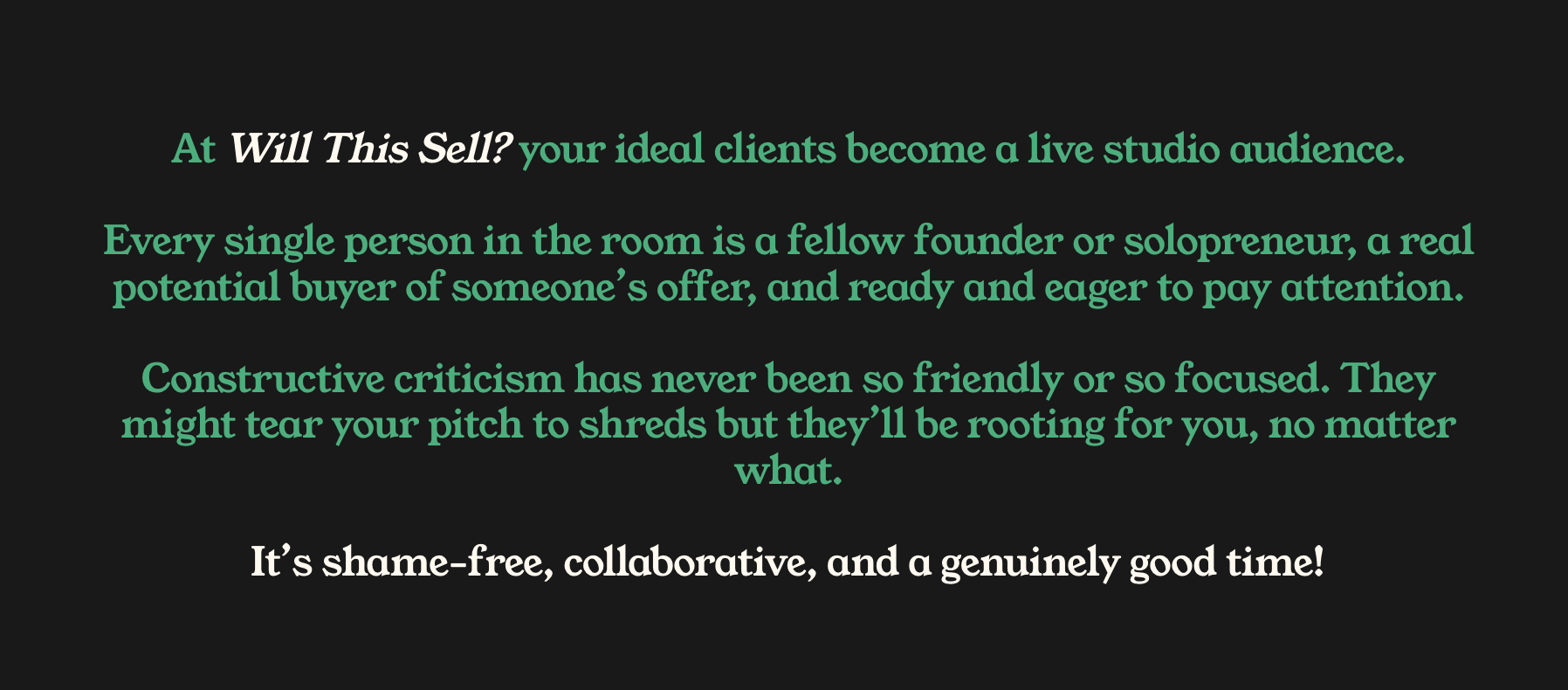
Low cost events work too as a try-before-you-buy sales funnel. Annie P. Ruggles has created a two tiered event system starting with a live pitch event called Will This Sell? where you can pay $125 to pitch or $25 to attend. Annie's got experts who gauge whether the seller's offer will work and she produces a validation report that the seller takes with them. That leads people into Make a Move Monday, which is a membership featuring a weekly accountability session for marketing and sales.
How they find the right audience for their events
Creating fun event formats can attract an audience, but how do you make sure your potential clients show up? Everyone I spoke with had this pretty dialed in on specific channels where their ideal customers hang out, like niched industry websites and professional communities. Even going so far as to send personal invitations.
Here's the channels they highlighted:
Invite a friend
Jenni Gritters said most of their audience growth is coming from referrals. She labeled it having a "heavy 'bring a friend' culture," which I've experienced in grassroots community groups before when leaders remind you to invite a friend next time at the close of the meeting. Nedra Rezinas's seeing the same thing with her Portland networking group. Her regulars bring new faces which expands her network with likeminded people.
Organizational partnerships
Naeemah Jade is not just leaning on partners for financial investment, she's also building organizational connections to tap into their audiences. Last week, she hosted Business Networking Breakfast as a collaboration between her coworking space and Chief, a C-Suite membership group with chapters all across the United States. That brought an entirely new audience into her space.
Advertising in hyper relevant spaces
For filling her 12 week cohort, Abbey Harlow found success buying ads with nonprofit memberships like the Nonprofit Learning Lab and the National Council of Nonprofit. She had 300 people register from those ads and 2 have become paying clients already (her last run ended in March.) Unless you're skilled with Facebook or Google, going to niche places to run your ads—like other communities or newsletters—is a smart move because you can find your exact audience and you don't have to sweat the targeting.
Posting in communities
Annie P. Ruggles posts her sessions on event calendars like HeyFamm, which is an LGBTQ+ professional networking app. Deanna Seymour's The Playhouse let you promote your outside events directly on their calendar too. In other communities, you just post it in a promotion channel to drive interested signups. Stacey Nicholls has good luck sharing her upcoming events in The Old Girls Club and The Co-Promotion Club.
Sending 1:1 invitations
Event calendars aren't Annie's primary marketing method. She prioritizes sending personal invitations to people she's recently connected with and established colleagues she hasn't seen in a while. She also asks her contacts "to send their best clients as a kind of graduation gift," which I'm fascinated by and didn't ask enough follow up questions about so if you want to know more about this, ask in the comments and we'll try to get Annie back to answer. (Update: see the comments for more about how Annie does this)
Using your own newsletter and social channels
Nearly everyone mentioned using their newsletter and their own social channels, particularly LinkedIn and Instagram, to attract people who've been hanging anonymously on the sidelines. Jenni noted that you really have to have built solid trust in those spaces for people to show up. She said, "I have an established audience from YEARS of running podcasts and publishing content in various places. Events really only work if you have an audience."
I agree that it's very hard to cold start events. You need a core crew who already knows you to join you and then, using the above methods, you can grow that base out and start to expanding to new relationships.
How that audience turns into leads and clients
It seems like getting people to the events is the hard part, but that's just the first hard part. The second hard part is turning all that effort into paying work. This is where I've fallen down on the job many times so I was keen to hear what our event hosts said about getting clients from their free sessions.
The approach our group took here splits into two segments: those who have very intentional sales paths from their events and those who leave it to the attendee to drive.
Building an intentional flow from event to sale
Stacy Eleczko feels my pain about events not paying off. She told me, at first, she wasn't getting potential clients from her LinkedIn Lives and free workshops either. But then, she started to make some changes in how she handled the before and after of her events. Stacy is a marketing strategist who focuses on messaging and copy. She said the free workshops are performing much better than the LinkedIn Lives. She's got one coming up this Wednesday called From Story to Site, where she'll show off how she works in a live event format. Before the session, she emails registrants individually to thank them for their interest and to ask if they have questions. Afterwards, she checks in—again individually—sending the replay and any resources. Stacy said, "That alone shifted things and I started getting more newsletter subscribers, discovery calls, and referrals."
She's not stopping there. Her latest experiments in driving better follow-up include asking workshop attendees if they want to come back a few weeks later and get her feedback on their messaging workbook. That personal attention to detail has resulted in two discovery calls which turned into one proposal sent and one signed contract just off one feedback session. Stacy's also trying video messages, recording these for every registrant before her workshops, which she hopes will increase attendance and engagement at the sessions. You can use something like Tella to record short videos and embed them in emails.
For Chris Musei-Sequeira, the Offers and Needs Market event format means he can pitch his services directly during the event in a natural way. The recap he and his team send out includes everyone's offers so sometimes attendees reach out to him right away. But if he hears a need during the session that he believes he can meet, he'll make the first move.
Stacey Nicholls told me her secret to converting clients from events is "overwhelming them in a good way" with free information so people who may have previously believed they could do their own website and marketing realize quickly they actually need her help. A brilliant sales strategy even Alec Baldwin's character from Glengarry Glen Ross would be proud of. She did note that sometimes it takes months after a talk for people to reach out with interest about hiring her, but they remember her.
Ensuring event registrants get on your mailing list was a key tactic for several folks I talked to, including Sarah Giffrow, Jessica Lackey and Ashlee Sang. Ashlee noted that she makes this obvious at registration (noting that extra consent for the mailing list.) These hosts use email to tag event attendees and to send relevant resources post-event. Then, those event attendees start getting their regular newsletter and begin to build familiarity and trust, sometimes coming in as leads later.
Leaving it to the attendee to drive
Naeemah Jade told me she doesn't want to "lead with sales energy." She's focused on building relationships in her Atlanta community without squeezing too hard to get an immediate result. Having been part of that community and watched Naeemah in action, I think this works for her because she has this unique balance of deep listening that's super rare and she genuinely comes across as interested in what people are doing (even when whatever they said sounded boring as hell to me.) Her energy's contagious and she gets a lot of repeat visitors thanks to the warm, rewarding environment she cultivates.
Jenni, Ashlee and Jessica said they're playing the long game too. Each of them makes a direct pitch, at the event or in the follow up email, but Jenni called it "an invitation, held loosely." They've seen people move from the free events to the paid programs over time and that's enough return on their investment to keep the free stuff going.
Should you give your time away for free?
When I look at marketing strategies we could use for our businesses, I'm always thinking about which are easiest to pull off for a majority of us versus channels that feel like winning the lottery.
I don't love giving away my time for free. I continue to be probably way too guarded about that given my low energy and unreliable internet, but I will keep experimenting with events as long as people keep coming to them. After these conversations, I will take some inspiration from folks like Stacy to keep experimenting with the pre- and post- activities and folks like Naeemah to work on being a more present host. And I'm going to develop my repeatable event formats. Harder than it seems for us neurodivergent types who are out there chasing butterflies but if these 11 entrepreneurs can do it, so can I.
On a scale of "majority doable" to "lottery status," I'd put events towards doable. They take some finagling to get them working for you and that payoff can be slow, but according to our community members, they can become a predictable path for finding clients. The factors you need to nail are your repeatable event format, your targeted channels to get attendees and your chosen follow up to cultivate clients. Once you prove the path from free to paid works, you've just got to keep it going.
Do you host events as a way to build your business? Tell us one thing that's working for you in the comments!


