


I attended The Newsletter Conference as a member of the press. All opinions are my own.
Convening for its third annual event, The Newsletter Conference welcomed newcomers, newsletter professionals, and seasoned leaders from around the world eager to learn, grow, and network in person.
While there is no shortage of chatter online about which newsletter platform is “the best” or tips for growing a newsletter, there aren't many events dedicated to building a newsletter business. With over 400 attendees in the building, indie creators sat right next to C-suite executives from major corporations and nonprofits, an important reminder that newsletters are a serious business at every stage.
As the founder of Grants For Creators, I run a grant-discovery newsletter. I find grants and other nondilutive funding opportunities for creators across the U.S. and Canada. With free and paid tiers, the majority of my income comes from paid subscriptions with digital products and consulting trailing behind. With a newsletter of nearly 22,000, I have big income goals for 2026. I specifically wanted to learn how top operators improve paid retention and conversion rates.
I share all of this to frame this recap so you know where I’m coming from.
Here are my biggest takeaways from the 2026 Newsletter Conference and how solopreneurs can leverage these insights to grow thriving online businesses.
Defining your unfair advantage
The Newsletter Conference wasted no time addressing the elephant in the room: AI.
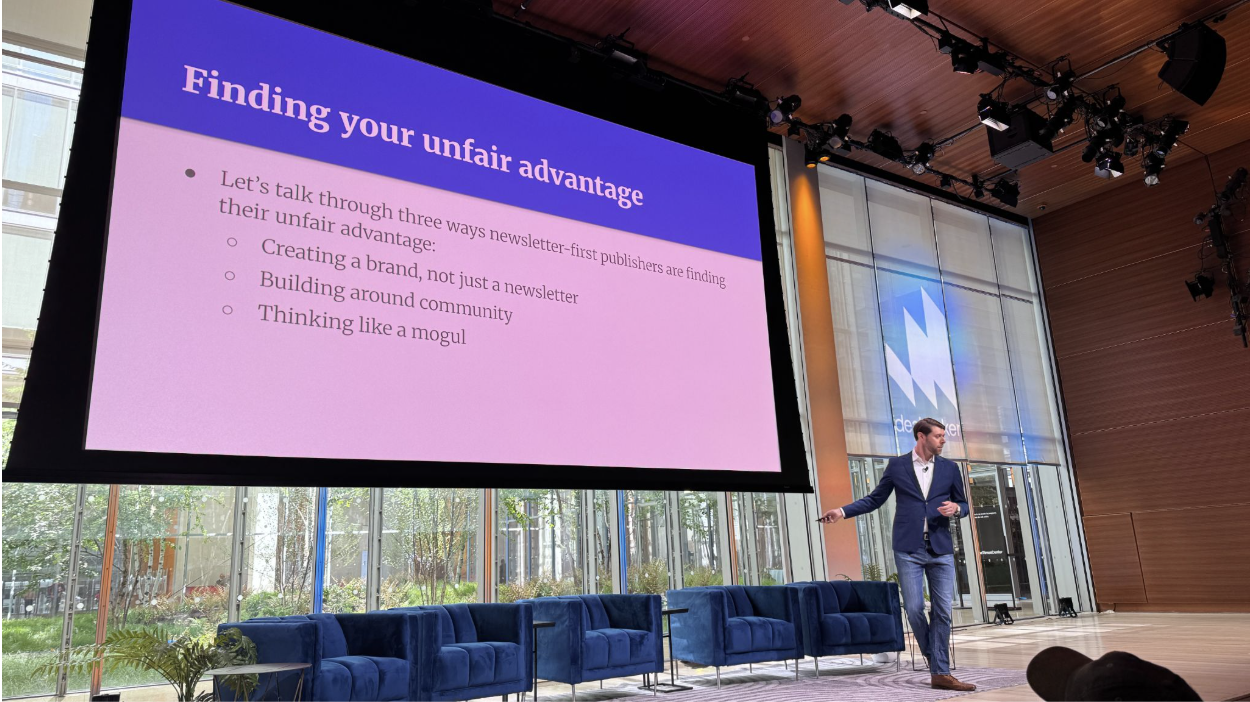
Keynoting the event, Dan Oshinsky, founder of Inbox Collective, set the pace with a thoughtful keynote address titled “Surviving the AI Inbox by Finding Your Unfair Advantage.”
Dan stressed that to stand out in the inbox, you have to lean into what makes you exceptional. Insert your voice and unique POV (point of view) into every issue. Go deeper than surface-level reporting. Think insider access to industry leaders or in-depth analysis your readers cannot get anywhere else. In the near future, newsletters that are either void of personality or can be easily summarized into a few bullet points are more likely to engage with AI agents than actual humans.
So, how do you write newsletters your people cannot wait to open and read?
You win the inbox when you approach subscribers as “stakeholders” who have a vested interest in the success of your project or business.
This shift moves newsletters from mass broadcasts to community hubs.
People are more engaged when they feel they are part of the conversation or movement, so consider ways to pull them in closer, such as highlighting members regularly or hosting in-person events like happy hours, comedy nights, and dinners.
Surviving the AI inbox ultimately comes down to prioritizing human connection: the depth of the relationship with your community. But relationships are a two-way street. Dan reminded us to do our part to foster that connection.
Acquire the right people
When growing a newsletter, acquire the right people, not more people.
This was a recurring theme that has me reevaluating my newsletter business and definition of success. For the last four years, subscriber count was my most important growth metric.
I wanted to grow a massive newsletter; however, if those subscribers are unwilling to engage or become paid customers, the business stalls and eventually declines.
Often, it’s not about the size of the email list but the quality of subscribers. Few newsletter operators ask: Who is actually on my list?
Here’s how to solve that problem.
If you aren’t already gathering qualitative data about your subscribers, now is the time to start. Survey your community often (more than once a year). You’ve probably heard this advice before, but it’s worth mentioning again. Inquire about the other publications they consume and communities they are part of. Understand their pain points and aim to solve them. Test different formats, and make incremental changes as you dial in your messaging and offers.
Data helps you make more informed decisions, but it is also incredibly valuable if you are monetizing through paid tiers, courses, memberships, affiliates, and sponsorships. All of these income streams prioritize reader alignment and fit.
Speaking of monetization, How to Grow a $5M Media Business Using The SCALE System by Andy Mackensen, Co-Founder of The Assist, blew me away. This was my favorite session, and here’s why.
Scaling with outcomes
If you were looking for step-by-step instructions on how to scale a newsletter with systems, Andy Mackensen delivered.
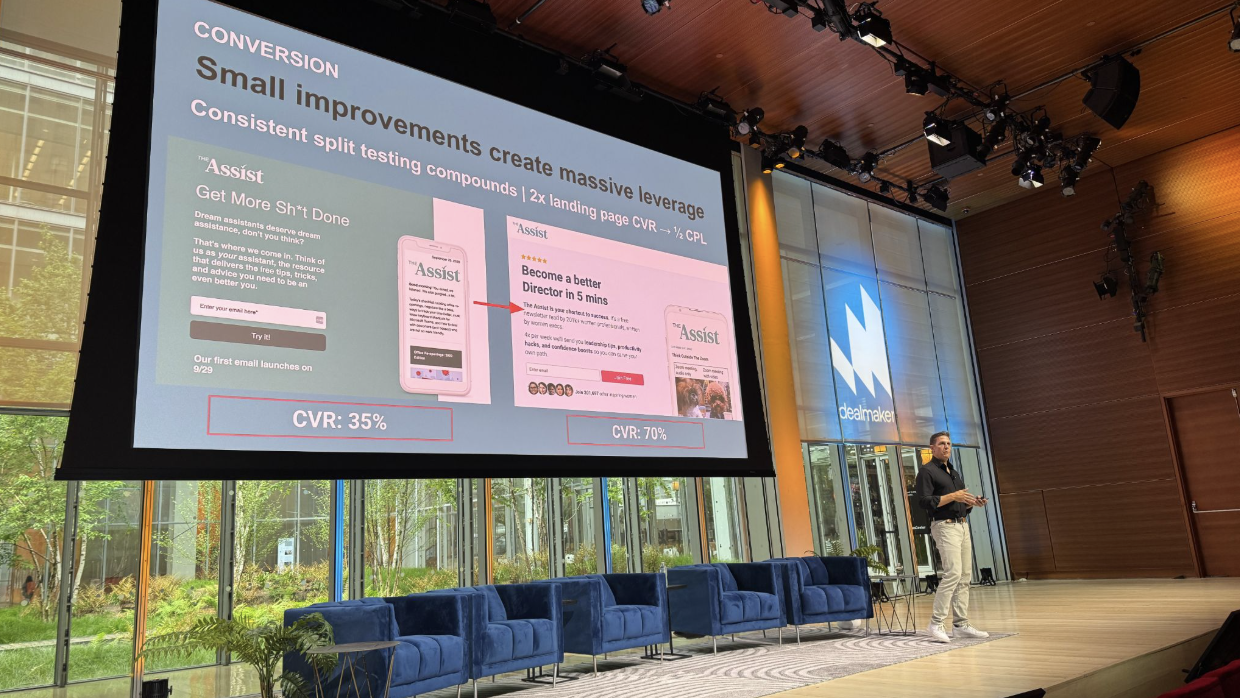
Andy walked us through how highly optimized opt-ins, quizzes, and 7-day welcome sequences can work together to activate subscribers and boost sales. When designing or improving your funnel, Andy underscored the importance of changing one variable at a time and collecting data to make informed decisions.
For example, on an opt-in page, changing copy or the color of a button is an easy way to incrementally improve sign-ups. Quizzes are a fun way to personalize the onboarding experience. Power them up by presenting right-fit offers alongside quiz results. Then use those quiz results to further segment your list. Lastly, in your welcome sequence, put your best foot forward. Lead with personal stories and content that has done well previously. Don’t forget to ask for the sale.
I left this session with an actionable workflow I can implement immediately and encouragement to experiment often.
I’m starting by building a new opt-in page with a third-party site like Unbounce since I have no control over onboarding customization with my current email service provider.
Map out your business model
When monetizing a newsletter, whether directly or indirectly, deciding on income streams is probably one of the first things that comes to mind.
Adam Ryan, founder and CEO of Workweek, presented two powerful choices.
Are you running a:
- “Who” business
- “How many” business
With a “who” business model, you focus on who engages with your list. The goal here is to double down on reader fit, not audience size. Think subscriptions, memberships, masterminds, products, and services.
With this business model, you want to learn as much as you can about your community:
- Who they are
- How they behave
- Understand their likes and dislikes
- What decisions are they trying to make?
On the contrary, a “how many” business model focuses on the total list size, which depends on scale. Events, affiliates, and sponsorships come to mind.
With this simple framework, I quickly realized I have spent the last four years running a “how many” business. No wonder I have been struggling with breaking through certain paid subscriber milestones without going viral.
Last year, I intuitively sensed other metrics mattered more, but I couldn’t figure out what to do differently. Everything made sense after Adam broke down the two different newsletter business models. Moving forward, I am switching to a “who” business, which means I’m leaving the vanity metrics behind. For that reason, I plan to prune my list and intentionally get out there to meet as many community members as I can. If I want to build the best grant curation newsletter for creators, I have to be in the trenches with my community, listening to what they need and bringing those insights back to my team.
What comes next
The Newsletter Conference pulls back the curtain to share insights and strategies from successful newsletter operators, indie and legacy media publications alike. I left the event with more clarity and an approachable to-do list.
So, what am I working on first?
I’m launching office hours for my paid community to give them more direct access to me.
I’m also building a resource library of templates paid subscribers can tap into immediately after onboarding, something that frontloads value and further leverages my unfair advantage.
Dan Oshinsky’s message about pulling your community closer gave me the nudge I needed to host my first dinner club in New York City. I’m not putting a big number on attendance like I usually would or attaching a lot of expectations. Instead, this is about showing up and starting small.
If you’re thinking about attending The Newsletter Conference, I say go for it. If you show up and follow through, you’ll make back your investment, and some. For me, the “who vs. how many” business model reframe is already changing how I think about every decision I make in my newsletter business.
To stay in touch about next year’s event, follow The Newsletter Conference on LinkedIn.
Danielle Desir Corbett is the founder of Grants For Creators, a grant discovery and education platform helping U.S. and Canadian creatives access non-dilutive funding to bring their ideas, projects, and businesses to life. A newsletter operator herself with nearly 22,000 subscribers, Danielle knows firsthand what it takes to build a paid community from scratch. She was recently recognized by Zoom as a 2026 Solopreneur 50 Honoree as part of the inaugural class of innovative independent business builders.


