
“Fuck You, Thank You. That’s my title,” said the petite student in the back row of my Community Education class. It was my first time teaching DIY podcasting.
“Don’t swear!” I gasped, like an old-fashioned school marm. I tried to defuse her f-bomb with all the conventional content creator wisdom I had to share. Apple Podcasts says not to. The algorithm will bury it. Your grandmother can’t brag about your show to her book club. Then, I brainstormed some euphemistic alternatives.
“How about Bleep You, Thank You? Fudge You, Thank You? Bonk You, Thank You?”
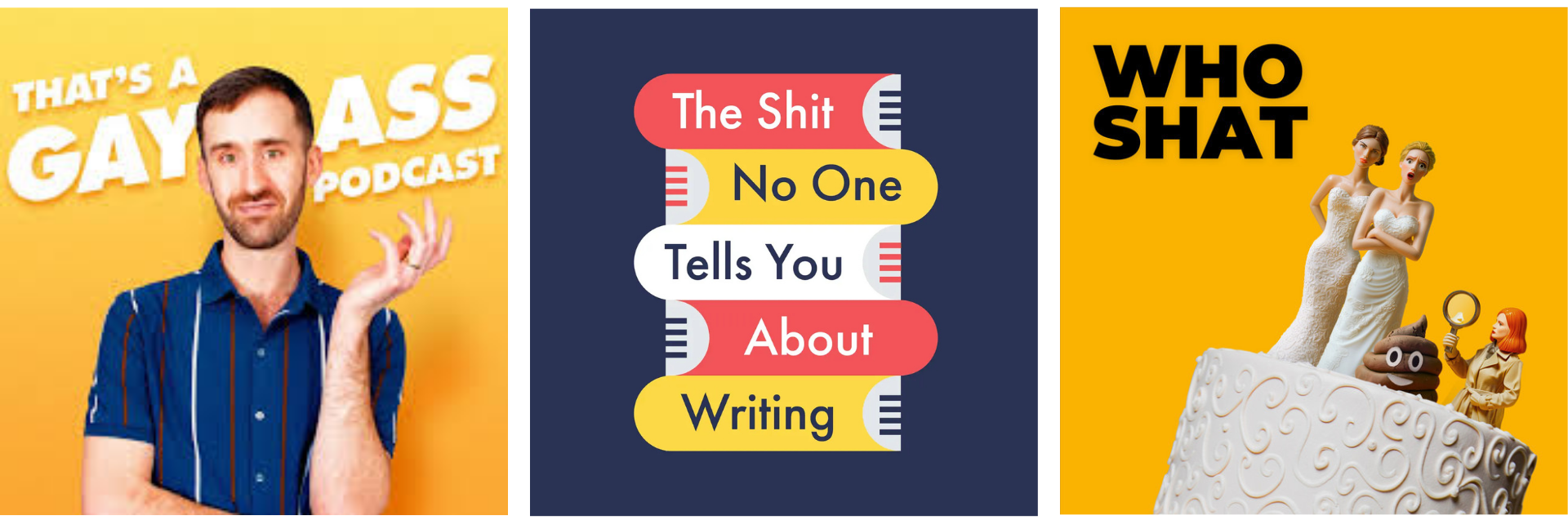
This happens every time I’ve taught the class since then. Someone plans a profane title; I talk them out of it. But recently I started to question my standard advice after scrolling through my own podroll, which includes The Shit No One Tells You About Writing, a cult favorite among aspiring authors, with a companion newsletter that boasts nearly 70,000 subscribers.
Who was I, to tamp down my students’ crass aspirations with my podcast title prudery? After all, the FCC doesn’t regulate podcast directories. And I’m not some title-generating genius. What do I really know about naming a hit podcast? My ten-episode historical deep dive into the life and legacy of Dr. Benjamin Spock, the famous 20th century pediatrician, is called Spock Talk, a name that attracted only dozens of listeners, mostly confused Star Trek fans. Then, there’s the longtime children’s media podcast I ended last year: It’s My Screen Time Too, a clunky title with an unfortunate conjunction that forced a social media handle mismatch.
Maybe I was wrong. Maybe my students should name their passion projects whatever they want.
“No one has said ‘no’ because of the title”
I spoke with Eric Williams, who hosts That’s a Gay Ass Podcast, a show he runs independently with a passionate base of thousands of listeners. Williams started the show as a creative pandemic lockdown project in 2020 with a title inspired by comedian Ashley Gavin’s We’re Having Gay Sex podcast. Since then, he’s scaled his bonus content, moved to Substack, and is on track to make the podcast his full-time job.
The only time Williams’s title got in the way was early on, when a network rejected his pitch and said the title was “too limiting.” Then, his interview with actress Laura Benanti went viral, with coverage in multiple big media outlets like People, The Hollywood Reporter, Vulture, and Deadline. His irreverent title instantly communicated both content and tone to gossip readers, and the podcast took off.
“Listeners know exactly what it is when they find it. They know it’s a comedy podcast that’s inherently brash, inherently loud, and unapologetic,” Williams said. When I asked if the title was ever a barrier to booking guests, Williams said, “No one has said no because of the title.” He never worries about gay ass getting in the way of growth.
“It shows how unhinged it is, all in one go”
The Who Shat On the Floor At My Wedding? And Other Crimes creators broke all of the rules when they named their podcast. Karen Whitehouse told me that she and her co-hosts, wife Helen McLaughlin and their amateur detective friend Lauren Kilby, earn close to enough revenue to make the podcast their full-time jobs. Now in season three, the show averages between 150,000 to 200,000 downloads a month, with over ten million downloads, total.
Whitehouse and her colleagues know that podcast creation guidelines suggest succinct titles, but they decided to go with a long one with a swear word at the forefront. When they began, Instagram verification took longer than they expected and they had to use alternative terms like “turd” when making the morning show rounds on their media tour after going viral. Overall, the bathroom humor-themed title only boosted the show’s popularity. Whitehouse said, “The title of our podcast is probably the most successful thing about it. It went viral because it raises the question of why people should listen and it shows how unhinged it is all in one go.”
The title has helped attract sponsors like Better Help, an online therapy company, who saw that the satirical investigation concept of “Who Shat On the Floor At My Wedding” can lighten up listeners’ days. “Our mission has always been to create absolutely bonkers, unhinged content to just make people smile. And so when brands are smart and they see what that is, they can align with it easily,” said Whitehouse. One missed opportunity? Kimberly-Clark, the multinational personal care company, passed on a toilet paper sponsorship proposal. Whitehouse said it was their loss. “I was like, 'are you sure? Because we're probably the number one fecal podcast out there.'”
Advice for New Podcasters
I asked Whitehouse if she had advice for new podcasters. “Just make your own rules,” she said. “We’re a perfect case in point, where we did everything wrong and the title stood out more. Way more.” I thought back to The Shit No One Tells You About Writing, in which would-be authors submit work for critique by the three literary agent hosts. Their feedback can be devastating. They offer blunt advice that no one else is giving to emerging writers. No wonder they’re so successful; the title promises exactly what the podcast delivers.
Should everyone call their podcast something they can’t say in church? No. Of course not. But, the next time one of my students proposes an expletive-laden title, I won’t discourage them. If they can make it meaningful, and not just for shock value, a swear word in a podcast title can effectively convey a playful or subversive tone. As long as the title is specific and fits the show’s content, a swear word can set the podcast apart from more mundane options in its genre, leading to bigger download numbers and more subscribers.
The next time I encounter a student with a profanely titled dream? “Do it,” I’ll say. “Let’s bonkin’ go!”
Deborah Copperud is a writer and podcaster in Minneapolis, where she's resisting the ICE occupation. Find her podcast Spock Talk anywhere you get your podcasts and look out for her new show Read Minnesota Books.