
I fell in love with branding thanks to a sky blue box of Warby Parker glasses that read Nice to see you.
I thought, “I want this job.”
I would learn that branding for direct to consumer is hard.
Branding for SaaS (my current industry-of-choice) is easier.
But branding myself is a never ending challenge to feel seen.
When you’re self-employed as a Brown person, branding takes on much higher-pitched and—in days of quiet spiraling with slowing sales pipelines—existential questioning.
Does my brand sound like me or does it sound Black? Are those the same thing? Should they be the same thing?
Is fill-in-the-blank-aesthetic-or-copy-choice going to cost me a sale? Is not doing it going to make me cringe at myself?
Can I get away with that?
Why do I have to choose to be professional or proudly myself?
In other words, what do I have to be comfortable cutting away from my culture to be taken seriously enough to close a sale? While repeating over and over to myself "Tis but a scratch!" and hoping, with enough repetition, I’ll believe it.
I don’t think those interior monologues are just me.
Because when I pop into a call with another Brown peep, I hear both of us exhale. And then, immediately jump to rambunctious chatter. We slide into our tones and phrases. Not worried about how we come across.
Then, the call is over. The meeting adjourned. The coffee drunk and the chat closed. And it’s back to being some shade of beige to fit into a mostly creamy corporate landscape.
How…flat.
You want to be authentic and bring your identity to work, which ostensibly brings your culture along with it. But you don’t want to feel like a token.
In the office, hell, sometimes that’s just the way it goes. But online? There’s a lot of everybody.
Over the past four years, I’ve been making little tweaks to myself and my brand. I’ve become a lot more comfortable in my skin. It shows up in shades on sales calls, in marketing materials and in the headshots on my workshop slides.
Bouncy. Blunt, but not brash. Big and bigger hair.
Everything after that is trimmings. Flourishes. Grace notes.
Here’s how I’ve managed to Brand while Black(ish) and avoid sinking into a trope.
What is professional and what is projection?
That way I’m not trying to think for someone or be unprofessionally unpalatable.
Instead of trying to cherry-pick parts of my culture that I think would be the most brandable, I’ve started with the parts of my culture that show up most in my daily life.
Especially since my culture is a unique, undulating thing that no one at work ought to be privy to in its entirety.
For me, that’s meant a love of music and rhythm, an affection for the bright and bold, and being a bit on the loud side in my marketing opinions.
My choice of song references in my subject lines (more on that later). My headshots that visualize my personality. My no-nonsense LinkedIn posts that speak directly to my audience without using words like “strategy” or “framework.”


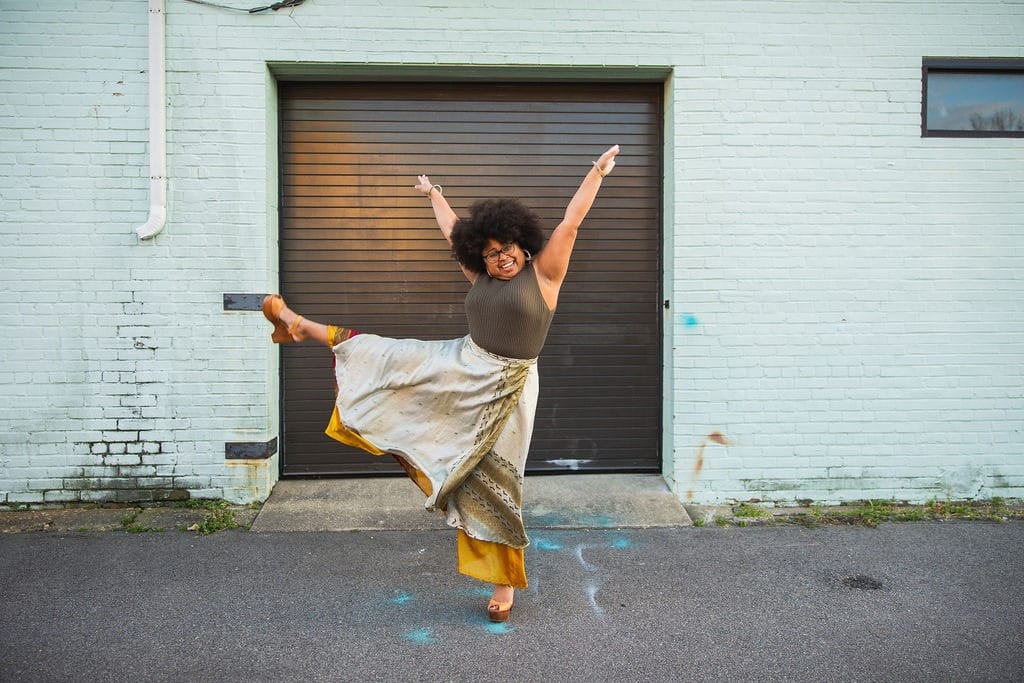
A few of Sophia's headshots
Which gets right to...
What parts of me are the same in every room?
So I’m not trying to build a persona that wouldn’t show up in any other setting.
Who am I at a party or a dance exchange? Or when I’m coworking in a coffee shop with friends?.
Not what value did I bring. Or was I clear on my offer. But what parts of me do I want them to remember?
My joy.
My encouragement of them in whatever they were doubting themselves and needed a cheerleader on.
My practicality in helping them get unstuck if it’s in my power or experience to do so.
My delight in getting to know them better.
I want them to think, “Dang, Sophia really gets me, and she’s rooting for me to succeed. She’s giving me all she’s got to make that happen where she can.”
Vibes, for lack of a better word.
What am I okay being misunderstood about?
Where the stakes are low and the personality sharing is high.
My newsletter titles are 50% song references, often punny ones. Another 30% are movie or pop-culture references. If they’re neither of those, it’s blending marketing with food in a way that makes almost no sense (but does make you stop to read it).
I am someone whose musical tastes span The Oh Hellos, Olivia Dean, Metallica, and Motown. Country has me in a close embrace with Reggaeton doing a shimmy in my shoulders.
A short track list of newsletter subject lines:
- Jan 29, 2026 “Play that funky musiccc write y’all…How to make that clunky content right”
- Sept 11, 2025 “Back to school, back to realityyyyyy”
- June 12, 2025 “Jump in loser, we’re going to the Matrix”
- Feb 13, 2025 “Why you scrollin’ bout this…Aint you tired?”
- Jan 30 2025 “Your website, whipped into shape in a week like a buttercream frosting”
I’ve done an issue that was themed entirely around Kendrick’s half-time show. Another on Sinners.
My vacation email sign-offs are limericks. My last name—O'Neal—unshockingly, comes with Irish lineage.
Our agency marketing approach is based off of The Commodores hit “Brick House.”
My rubric is this:
- Does this feel NSFW? I love a good trap song, but those lyrics do not translate well to work appropriate, no matter how I try to twist them. If it’s mildly risque, but quickly shifts to fine, then maybe.
- Does this poke fun at products and frustrating problems, or the people behind them? Products and problems, good to go. People? That’s just being mean.
- Is this something that is universally funny? My favorite newsletter subject line was not music related: “How to write like a squirrel on coke.”
- Is it professional? No. Is it funny? Yes. Did I get any angry emails back? No.
- Did I get emails from readers doing spit takes when reading it? Yes.
Have I broken these rules before? Yes. But rarely. And even when they were well received—like this LinkedIn post with a tongue-in-cheek opening line—I cringe when I read it and have decided to not repeat it.
Like with anything business, there’s a bit of trial and error.
Who is going to get what I’m saying real quick?
This does not mean trying to pattern match with the people who are exactly like me.
At this point, my clients' locations look like an influencer’s passport stamps; Netherlands, Japan, Australia, South Africa, France, UK, Germany.
What being American and Black translates to is very different in each of those countries
I launched my agency the day before Thanksgiving on Indie Hackers in 2021. The only ones online were founders who had day jobs and were trying to get a startup off the ground. Afraid of fully presenting themselves because they were worried that their boss might not like it. Or because they weren’t completely convinced that their big idea wasn’t a big mistake.
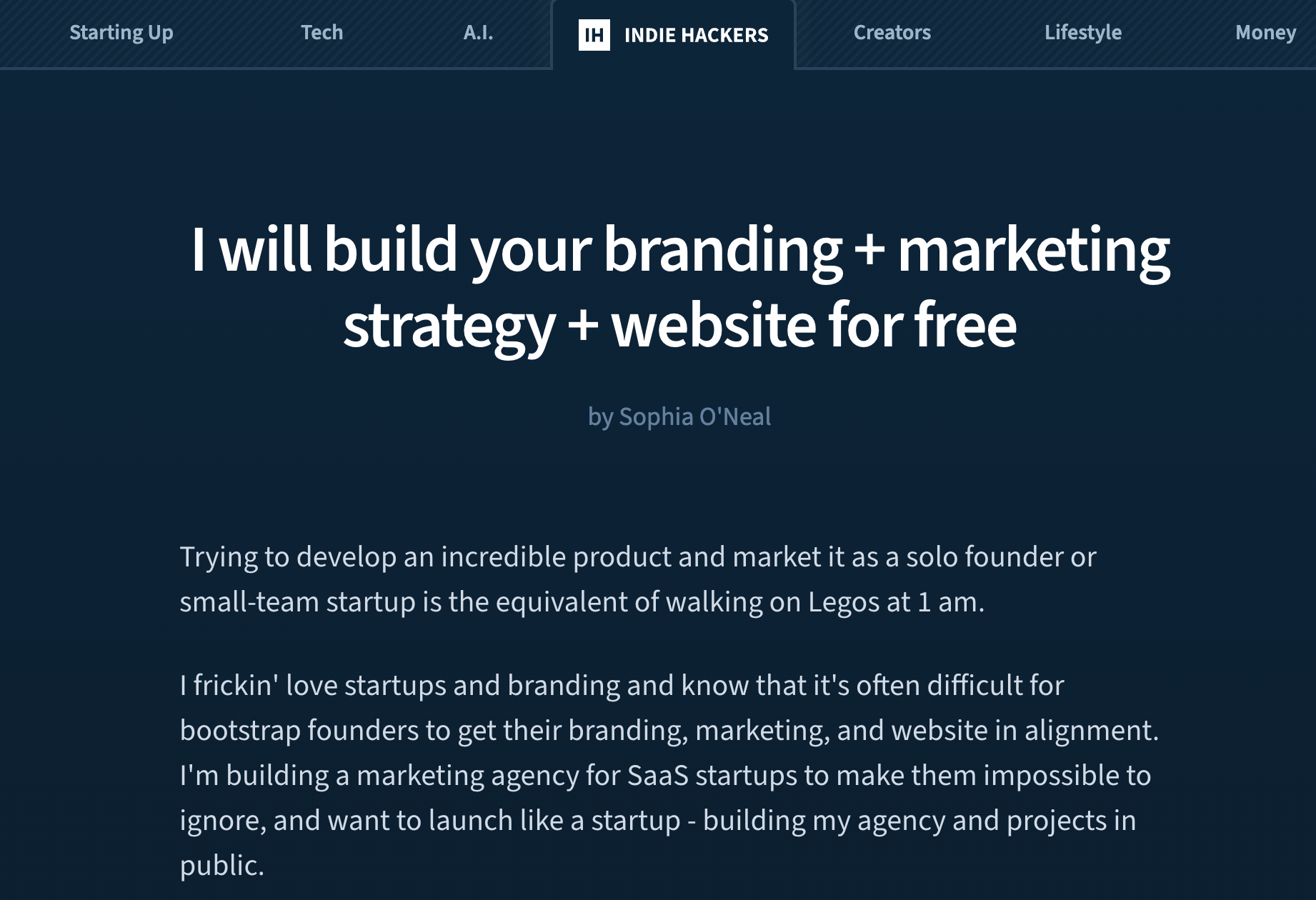
They understood the unconventional vibe of my launch. And they appreciated my no-nonsense marketing approach and quirky demeanor while I sorted out SOP’s and invoice methods.
That appreciation for authenticity and a recognition of the life outside of work has been the throughline in our best-fit clients since.
That’s a culture match without having anything to do with our culture of origin.
We’re all trying to figure out where we belong.
Branding should be disarming.
And it should tell the people you want to work with that they can exhale here.
If someone takes me and my 3 Bs—Bouncy. Blunt. Big and bigger hair—and goes “Wow, she’s so Black,” in a negative (or positive) way, that’s on them.
But within three minutes on a call, most people I meet are noticeably more at ease. Because I am myself, and that tells them that they can be too.
While being Black (period) and self-employed (period) makes the belonging question a more physically and financially obvious one, it’s still there for us all.
Yes, the headshots, the subject lines, the offers, the positioning—all of that matters. I’m a marketer. Of course, it matters!
But if you’re comfortable in your personality, and the parts of your culture that come through in it, you will stand out. You’re the one defining your branding. Even if you’re asking for help to do it from someone like me.
I’ve changed my offers, switched positioning, taken the word “strategist” in and out of my title about a half-dozen times, and moved industries five times from CPG to now SaaS with a stint in outdoor goods.
But, sometimes I drink my mid-morning coffee and just laugh. I can’t believe that this is my life. I am completely myself at work, not that I let everything hang out or am wildly unprofessional. My work is not my entire identity, but my true identity is unapologetically in my work.
I’d like to think that is part of my ancestor’s wildest dreams.
Sophia O'Neal is the CEO of Workflow, a website feedback tool for agencies, and founder of SaaS marketing agency Ignore No More. She co-writes the newsletter [Marketing is] Not My Job, a weekly email to help you nail marketing when you didn't want to do it in the first place.